Glucose Spikes After Meals: What’s Normal?
What is a normal glucose spike after eating?
A rise in blood sugar after eating is normal. For most people without diabetes it stays under about 140 mg/dL and returns to baseline within two to three hours, in line with International Diabetes Federation guidance. One higher reading is no cause for alarm; it is frequent, large, sustained spikes that matter.
- Normal peak: generally under 140 mg/dL for people without diabetes.
- Normal timing: peaks around 30–60 minutes, settles in 2–3 hours.
- What matters: the long-run pattern, not any one meal.
A spike is not a symptom — it is physiology
Thanks to continuous glucose monitors and a wave of social media coverage, “glucose spikes” have become something people worry about even when their health is fine. So let us start with the reassuring truth: blood sugar is supposed to rise after you eat. When you digest carbohydrate, it becomes glucose in the blood, your pancreas releases insulin, and cells take that glucose up for energy or storage. The rise and the fall are the system working exactly as designed, not a warning light.
What varies is how high the rise goes and how quickly it comes back down. That curve — not the mere existence of a spike — is what actually tells you something. This article walks through what a normal post-meal response looks like, when a pattern is worth a clinician’s attention, and how to keep the whole thing in perspective.
The normal numbers, in context
International Diabetes Federation guidance on post-meal glucose suggests that, for most people, blood sugar should stay under about 140 mg/dL (7.8 mmol/L) after eating and return toward baseline within a couple of hours (Shah et al., 2019). That figure is a useful anchor, but it is a signpost rather than a hard line drawn around every individual. Your peak depends on the meal, your activity, your sleep, stress, and even when in the rise you happen to measure.
Roughly, the commonly used two-hour post-meal bands look like this:
| 2-hour reading | General interpretation |
|---|---|
| Under ~140 mg/dL | Typically considered normal |
| 140–199 mg/dL | Grey zone (impaired glucose tolerance) |
| 200 mg/dL or above | A clinician should assess |
These thresholds come from clinical testing and are context-dependent, so treat them as rough guides. One reading in the grey zone after a large pasta dinner is not a diagnosis; a consistent pattern across many meals and days is what a professional would actually interpret.
How long should it last?
In someone with healthy glucose control, blood sugar typically peaks around 30 to 60 minutes after eating, then glides back toward its starting point within about two to three hours. The shape matters as much as the height: a moderate rise that resolves promptly is a sign the body is clearing glucose efficiently.
What draws more attention is a spike that climbs very high, or one that lingers well past the three-hour mark before coming down. A slow return can indicate the body is working harder than ideal to move glucose out of the blood. Again, one late-settling reading after an unusual meal is noise; a repeated pattern is signal.

Should people without diabetes worry?
Mostly, no — and this is where a lot of online content overshoots into fear. A normal rise after a meal is not damaging; it is routine. The legitimate concern in the research literature is about frequent, large and sustained spikes repeated over months and years, which may contribute to metabolic strain over time (Hall et al., 2018). That is a story about long-run patterns, not about a dessert on a Friday night.
It is also worth remembering that a continuous glucose monitor will show every wobble, and seeing your own numbers can make a perfectly normal 130 mg/dL feel dramatic. Context beats reactivity. If your fasting numbers and your clinician’s tests are healthy, the occasional higher post-meal reading is not something to lose sleep over. If you are seeing a consistent pattern of high, slow-settling spikes, that is a reason to talk to a professional, not to panic.
What makes one meal spike more than another
If your readings jump around, it usually reflects the meal rather than anything wrong with you. The biggest driver is the type and amount of carbohydrate. Fast, refined carbs — a large glass of juice, white bread, a sugary pastry — are digested quickly and produce the steepest rises, while the same number of calories from beans, vegetables and whole grains climbs more gently because fibre slows the whole process. What you eat with the carbohydrate matters too: protein, fat and fibre alongside a starch all soften the peak, which is why a plain bagel spikes harder than a bagel with eggs.
Context beyond the plate plays a part as well. A poor night’s sleep, a stressful morning, or eating when you have barely moved all day can each nudge a given meal higher than usual, while eating after exercise often blunts the same meal. Individual variation is real and well documented: two people can eat an identical meal and see quite different curves, shaped by genetics, gut bacteria, body composition and fitness. That is precisely why chasing a single “perfect” number is the wrong game — your own trend across many meals tells you far more than any one reading compared against someone else’s.
Gentle ways to flatten the curve
If you simply prefer smoother post-meal readings, the levers are the familiar, low-risk ones: favour fibre-rich and whole foods over refined carbohydrate, eat vegetables and protein before the starchy part of a meal, take a short walk afterward, and keep sugary drinks to a minimum. None of these is dramatic on its own, and together they nudge the curve lower without any downside.
Where a supplement fits
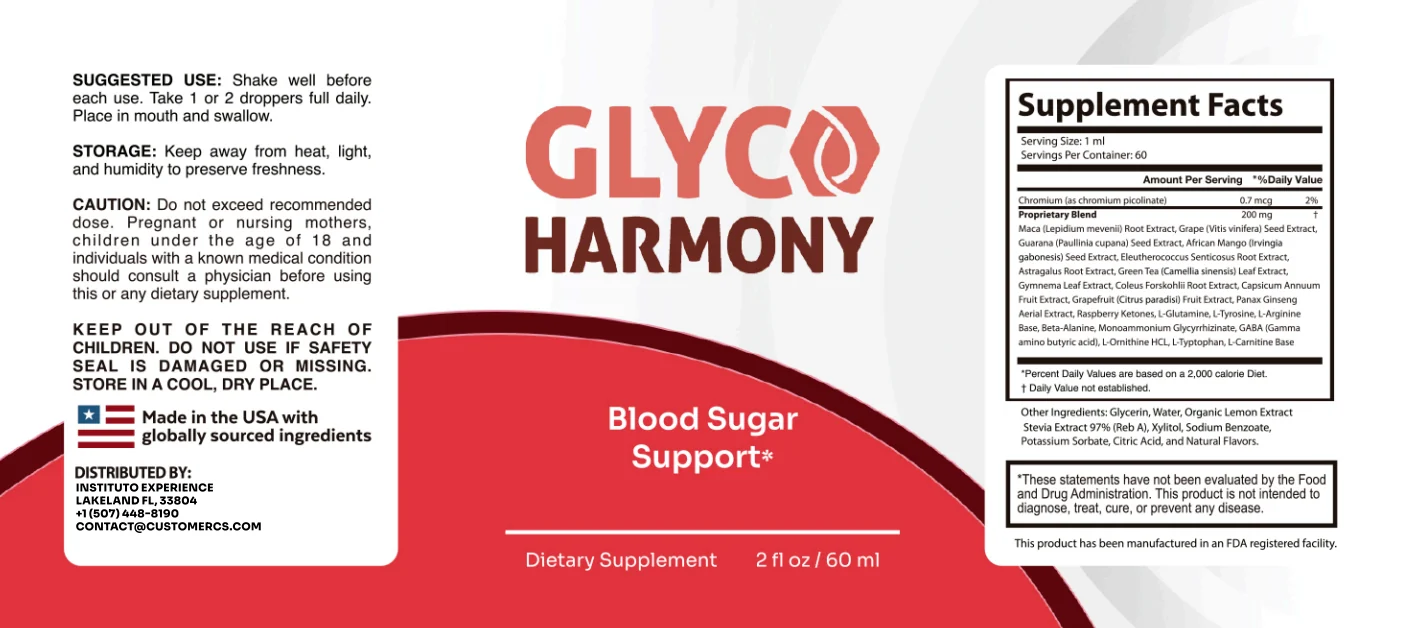
A blood-sugar support supplement such as Glyco Harmony — built on chromium plus botanicals like gymnema, cinnamon, green tea and ginseng — is designed to support healthy glucose metabolism, and some of those ingredients have supporting research. Placed honestly, it is a minor add-on that sits on top of the habits above, not a fix for a spiking curve and certainly not a treatment for any condition. If you use one, read the label, check the per-day amounts against the evidence, and keep expectations realistic.
Medical note: this article is general information, not medical advice, and Glyco Harmony is a dietary supplement for healthy blood-sugar support, not a treatment for diabetes or any disease. If you are concerned about your post-meal readings, or you take glucose-lowering medication, discuss it with a qualified healthcare professional who can interpret your numbers in context.
Scientific references
- Shah VN, et al. “Continuous Glucose Monitoring Profiles in Healthy Nondiabetic Participants: A Multicenter Prospective Study.” Journal of Clinical Endocrinology & Metabolism, 2019 — 153 participants aged 7 to 80
- Hall H, et al. “Glucotypes reveal new patterns of glucose dysregulation.” PLOS Biology, 2018
- Engeroff T, Groneberg DA, Wilke J. “After Dinner Rest a While, After Supper Walk a Mile? A Systematic Review with Meta-analysis on the Acute Postprandial Glycemic Response to Exercise Before and After Meal Ingestion.” Sports Medicine, 2023 — 8 crossover trials, 116 participants
- American Diabetes Association — Diagnosis and blood sugar ranges
- U.S. CDC — Manage Blood Sugar
What is a normal blood sugar level after eating?
For most people without diabetes, blood sugar after a meal stays below about 140 mg/dL (7.8 mmol/L), which aligns with International Diabetes Federation guidance for post-meal glucose. A rise after eating carbohydrate is completely normal; the level then drifts back toward baseline over the next couple of hours. Individual peaks vary with the meal, the person and the timing of the reading.
How long should a glucose spike last?
In a person with healthy glucose control, blood sugar usually peaks roughly 30 to 60 minutes after eating and returns close to baseline within about two to three hours. A spike that climbs very high or stays elevated well beyond three hours more often is worth discussing with a clinician, as it can reflect how the body is handling carbohydrate.
Are glucose spikes bad for non-diabetics?
A normal rise after a meal is not harmful; it is simply physiology. The concern raised in research is about frequent, large and sustained spikes over months and years, which may contribute to metabolic risk. An occasional higher reading after a big or sugary meal is not something to fear. Patterns matter far more than any single number.
How high is too high after a meal?
Guidance commonly treats readings staying under about 140 mg/dL two hours after eating as normal, 140 to 199 mg/dL as a grey zone associated with impaired glucose tolerance, and 200 mg/dL or above on testing as a level a clinician should assess. These thresholds are context-dependent, so use them as rough signposts and confirm anything concerning with a professional.
Related reading
See how Glyco Harmony puts this together
A daily blood-sugar support blend in a liquid dropper — with every ingredient and its evidence laid out, so you can check the amounts against the research yourself.