Cinnamon for Blood Sugar: Ceylon vs Cassia Guide
Is Ceylon or Cassia cinnamon better for blood sugar?
For daily use, Ceylon is usually the safer pick because it is far lower in coumarin, a compound that can stress the liver at high intakes. Most blood-sugar studies used Cassia, so the evidence leans that way, but Cassia's coumarin caps how much you should take. Clinical data shows modest, inconsistent glucose effects — not a cure.
- Ceylon ("true" cinnamon): low coumarin, better for daily amounts.
- Cassia: more studied, but high coumarin means a liver caution.
- Reality check: effects on fasting glucose are modest and mixed.
Two very different spices sold under one name
Most people think of cinnamon as a single ingredient, but the powder in your cupboard is almost certainly one of two quite different barks. Ceylon cinnamon (Cinnamomum verum, literally "true cinnamon") comes mainly from Sri Lanka and is milder, sweeter and more expensive. Cassia cinnamon (usually Cinnamomum cassia) is the cheaper, more robust variety that dominates supermarket shelves and most baked goods in North America. They taste similar, but for blood-sugar purposes the difference is not academic — it comes down to a single compound.
That compound is coumarin, a naturally occurring substance that Cassia contains in much larger amounts than Ceylon. Coumarin is the reason the "which cinnamon?" question actually matters, because it turns a harmless-sounding spice into something you can, in principle, take too much of. Understanding this one distinction is the key to using cinnamon sensibly.
The coumarin problem, explained
Coumarin has been studied for its effects on the liver, and in sensitive individuals high or prolonged intakes have been associated with liver stress. Because of this, European food-safety authorities established a tolerable daily intake for coumarin — a threshold you are not meant to exceed regularly over the long term. Here is the catch: Cassia cinnamon can be high enough in coumarin that just a couple of grams a day, taken consistently, may approach or exceed that threshold for some people.
Ceylon cinnamon, by contrast, contains only trace amounts of coumarin. That is why it is generally the preferred choice for anyone planning to take cinnamon daily for blood-sugar support rather than sprinkling a little on the occasional dessert. The occasional pinch of Cassia in cooking is not a concern for most people; the concern is the daily, supplement-style habit at higher amounts.

What the clinical data actually shows
Now to the question everyone really wants answered: does cinnamon do anything for blood sugar? The honest summary is "a little, sometimes." A number of clinical trials — most of which used Cassia, since it is cheaper and more available — suggest that cinnamon can produce modest reductions in fasting glucose and small improvements in markers of insulin sensitivity. Some reviews find a measurable effect; others find the results too inconsistent to be confident about (Moridpour et al., 2024).
What holds these findings together is that the effects, where they appear, are small, and they tend to show up more clearly at higher doses and over longer periods. This is not the profile of a powerful glucose-lowering agent. It is the profile of a supportive spice with a plausible, mild influence — genuinely interesting, worth including in a thoughtful diet, but not something to lean on the way you would lean on prescribed treatment. Anyone promising dramatic drops from a spice is overselling.
How cinnamon might work in the body
The proposed mechanisms help explain why the effect is mild rather than dramatic. Compounds in cinnamon — notably a group of polyphenols — have been studied for their ability to improve how cells respond to insulin and to slow the breakdown of carbohydrates in the gut, which could blunt the glucose spike after a meal. There is also interest in cinnamon's antioxidant activity, since oxidative stress is part of the wider metabolic picture.
These are plausible, laboratory-supported ideas, but they are a long way from a guaranteed clinical outcome. A mechanism that works in a dish of cells, or in a short-term post-meal test, does not automatically translate into a lasting change in someone's fasting glucose over months. That gap between mechanism and real-world result is exactly why the human trials are mixed — and why cinnamon belongs in the "supportive, worth trying, not a cure" category rather than the "proven treatment" one (Leach & Kumar, Cochrane 2012).
Why the "best" cinnamon depends on your goal
There is a slight irony worth naming: the variety with the stronger evidence base (Cassia) is also the one you should limit, while the variety that is safer for daily use (Ceylon) has been studied less. This is not a contradiction so much as a trade-off. If your priority is following the exact conditions of the trials, that points to Cassia — but only at conservative amounts and not indefinitely. If your priority is a sustainable daily habit with minimal risk, Ceylon is the sensible default, accepting that its specific evidence is thinner.
| Factor | Ceylon (true cinnamon) | Cassia |
|---|---|---|
| Coumarin content | Very low (trace) | High |
| Best for daily use | Yes | Limit the amount |
| Blood-sugar evidence | Less studied | Most trials used it |
| Cost / availability | Pricier, specialty | Cheaper, common |
| Main caution | Few concerns at normal use | Liver caution at high daily doses |
How much cinnamon, and how to use it sensibly
Trials on blood sugar have used a broad range, frequently between about 1 and 6 grams per day, with many settling around 1 to 3 grams (Yeh et al., 2003). If you choose Cassia, treat it with respect: keep the daily amount modest because of coumarin, and avoid taking large doses continuously for months on end. If you choose Ceylon, you have more room to be consistent without the coumarin worry, though there is no benefit to megadosing — steady, moderate use is the point.
Practically, cinnamon is easy to fold into a normal day: stirred into oats, yoghurt or coffee, or taken as a standardised extract in a supplement. If you use a product, check whether it specifies Ceylon or Cassia and at what dose — a label that just says "cinnamon" tells you very little about the coumarin you are getting. And because cinnamon may have a mild effect on glucose, anyone on glucose-lowering medication should mention regular use to their clinician rather than assume a spice is automatically inert.
Medical note: this article is general information, not medical advice. Cinnamon is a culinary spice and dietary supplement for general support, not a treatment for diabetes or any disease. High daily intakes of Cassia cinnamon can be a concern because of coumarin — speak to a healthcare professional before using cinnamon supplements regularly, especially if you have liver conditions or take medication.
Scientific references
- Moridpour AH, et al. “The effect of cinnamon supplementation on glycemic control in patients with type 2 diabetes mellitus: an updated systematic review and dose-response meta-analysis of randomized controlled trials.” Phytotherapy Research, 2024 — 24 randomised trials
- Leach MJ, Kumar S. “Cinnamon for diabetes mellitus.” Cochrane Database of Systematic Reviews, 2012
- Yeh GY, et al. “Systematic review of herbs and dietary supplements for glycemic control in diabetes.” Diabetes Care, 2003
- NIH NCCIH — Cinnamon: What You Need To Know
- American Diabetes Association — About diabetes and standards of care
Is Ceylon or Cassia cinnamon better for blood sugar?
For regular daily use, Ceylon (true cinnamon) is generally the safer choice because it contains far less coumarin, a compound that can stress the liver at high intakes. Most blood-sugar studies actually used Cassia, so the strongest evidence is for Cassia, but Ceylon lets you take a daily amount without the coumarin concern. Neither is a treatment for diabetes.
How much cinnamon should I take daily?
Studies on blood sugar have used a wide range, often between about 1 and 6 grams of cinnamon per day, with many landing near 1 to 3 grams. If you use Cassia, stay conservative because of its coumarin content; European bodies suggest a tolerable daily coumarin intake that a couple of grams of Cassia can approach. Ceylon allows more flexibility, but consistency matters more than a large dose.
Is too much cassia cinnamon dangerous?
It can be, mainly because of coumarin. Cassia cinnamon is much higher in coumarin than Ceylon, and high or prolonged intakes have been linked to liver stress in sensitive individuals. Occasional culinary use is not a concern for most people, but taking large daily amounts of Cassia as a supplement is where the risk rises, especially alongside other liver-active medications.
Does cinnamon really lower blood sugar?
Some clinical trials suggest cinnamon can produce modest reductions in fasting glucose and small improvements in insulin sensitivity, but results are inconsistent and effect sizes are generally small. It is best viewed as a supporting spice with a plausible, mild effect rather than a reliable glucose-lowering agent. It is not a substitute for diet, activity or prescribed medication.
Related reading
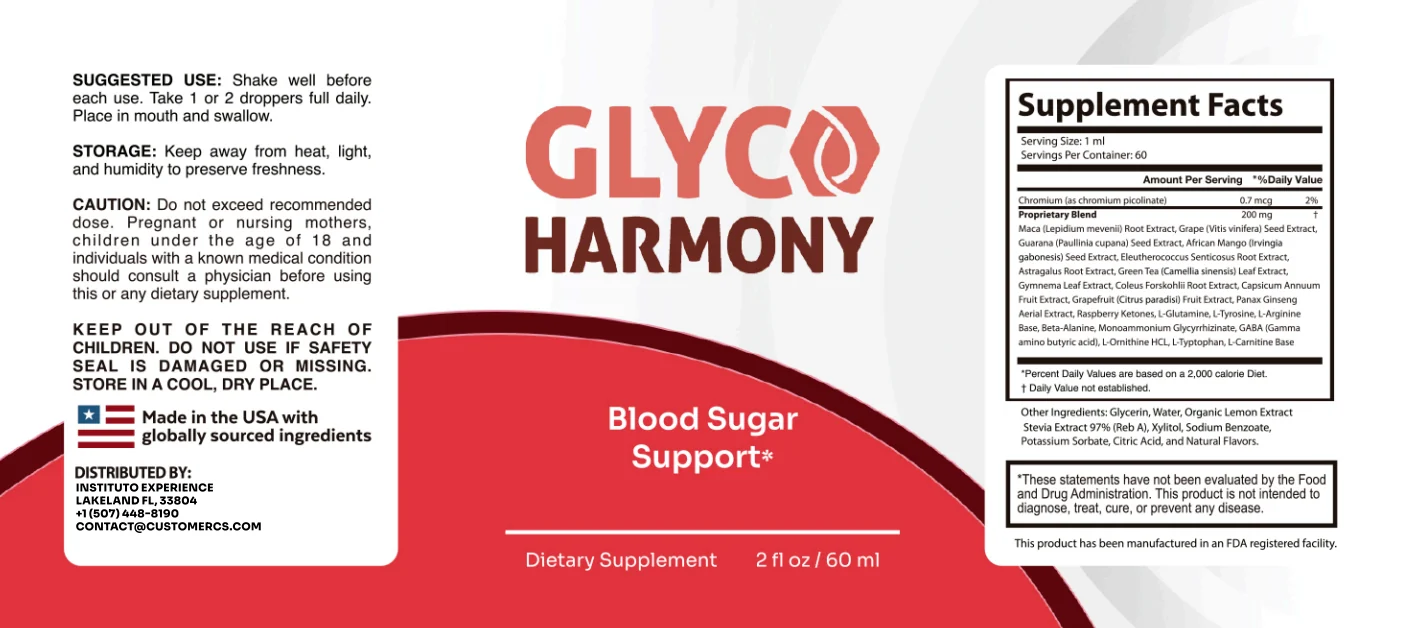
See how Glyco Harmony puts this together
A daily blood-sugar support blend in a liquid dropper — with every ingredient and its evidence laid out, so you can check the amounts against the research yourself.