Fiber and Blood Sugar: How Much and Which Types
How does fiber help steady blood sugar?
Soluble fiber forms a gel in your gut that slows carbohydrate digestion, so glucose enters the bloodstream more gradually and post-meal spikes are gentler. Aim for about 25 to 38 grams of total fiber a day, favouring viscous sources like oats, psyllium and legumes, and increase your intake slowly to avoid discomfort.
- The mechanism: soluble fiber slows digestion and flattens the glucose curve.
- The target: about 25 g/day for women, up to 38 g/day for men.
- Best sources: oats, psyllium, beans, lentils, apples and citrus.
Why fiber is different from the rest of your carbohydrates
Fiber is technically a carbohydrate, but your body cannot break it down and absorb it the way it does starch and sugar. That single fact is what makes it interesting for blood sugar. Where digestible carbohydrates are quickly converted to glucose and delivered to the bloodstream, fiber passes through the small intestine largely intact. It adds bulk, feeds gut bacteria, and — in the case of one particular type — physically changes how fast the rest of your meal is absorbed.
Of all the diet changes people try for steadier glucose, raising fiber intake has some of the most consistent evidence behind it, and it comes with a long list of other benefits rather than trade-offs (Reynolds et al., 2020). But "eat more fiber" is too vague to be useful. The type of fiber matters, the amount matters, and how you add it matters. This guide walks through each so you can make specific, practical changes rather than a hopeful gesture at the produce aisle.
Soluble vs insoluble fiber: what is the difference?
Dietary fiber comes in two broad categories, and most plant foods contain a mix of both. The distinction is not academic — it explains why some high-fiber foods do more for your glucose curve than others.
Soluble fiber dissolves in water to form a viscous, gel-like substance in the digestive tract. This is the fiber that matters most for blood sugar. That gel slows gastric emptying and creates a physical barrier that digestive enzymes have to work through, which delays the breakdown and absorption of carbohydrates. Oats, barley, psyllium, beans, lentils, apples, citrus fruits and flaxseed are all rich in it. Some soluble fibers are also fermented by gut bacteria into short-chain fatty acids, which appear to have their own modest metabolic benefits.
Insoluble fiber does not dissolve in water. Instead it adds bulk to stool and speeds the passage of material through the gut, which is why it is associated with regularity and digestive health. It is found in whole grains, wheat bran, nuts, seeds and the skins of many vegetables. Insoluble fiber is genuinely good for you, but its direct effect on the post-meal glucose spike is smaller than that of viscous soluble fiber. When the goal is a flatter curve after eating, soluble fiber is the one to prioritise — while still eating plenty of both.
How soluble fiber actually slows glucose absorption
The mechanism is refreshingly concrete. When you eat a meal containing soluble fiber, the fiber absorbs water and forms a gel in the stomach and small intestine. That gel does three useful things at once. First, it slows how quickly the stomach empties its contents into the small intestine, so the carbohydrate arrives in a slower, steadier trickle rather than a flood. Second, the thickened contents make it physically harder for digestive enzymes to reach the starches and sugars and break them down. Third, the gel slows the movement of the resulting glucose across the intestinal wall into the blood.
The net result is that the same amount of carbohydrate is absorbed over a longer window of time. Because the glucose arrives more gradually, the peak is lower and the rise is gentler — a flatter curve rather than a sharp spike and crash. It is important to be precise about what this is and is not. Fiber does not cancel out the sugar or remove carbohydrate from the meal; the total glucose still gets absorbed. What changes is the pace, and for blood sugar management, pace is much of the battle.

How much fiber do you actually need?
The widely cited targets come from dietary guidelines and are usually expressed as about 25 grams per day for adult women and up to 38 grams per day for adult men, or more simply around 14 grams for every 1,000 calories eaten. These are total-fiber goals covering both types combined. The uncomfortable reality is that most people in Western countries eat only around 15 grams a day — roughly half the recommendation — so for the average person the practical instruction is simply "considerably more than now."
There is no separate official target for soluble fiber alone, but studies that show glucose benefits often used somewhere in the range of 7 to 15 grams of viscous soluble fiber per day, which is achievable through food (Xie et al., 2021). The single most important practical tip is to increase fiber gradually over a couple of weeks rather than all at once, and to drink more water as you do. A sudden jump can cause bloating, gas and cramping, which is the most common reason people abandon the effort before their gut adapts.
| Fiber factor | What to aim for |
|---|---|
| Total daily fiber (women) | About 25 g |
| Total daily fiber (men) | Up to 38 g |
| Simple rule of thumb | ~14 g per 1,000 calories |
| Best type for glucose | Soluble, viscous fiber |
| How to add it | Gradually, with more water |
The best high-fiber foods for steadier blood sugar
You do not need exotic products to hit these numbers. A handful of everyday foods do most of the work, and they are worth building meals around. Oats and oat bran are rich in a soluble fiber called beta-glucan, the same viscous fiber studied for cholesterol and glucose. Legumes — beans, lentils and chickpeas — are arguably the best value of all, combining high soluble fiber with protein and a naturally low glycemic impact. Barley is another beta-glucan powerhouse that works well in soups and grain bowls.
Among fruits and vegetables, apples, pears, citrus, berries, carrots and Brussels sprouts carry meaningful soluble fiber, and eating the skin where edible keeps the insoluble fraction too. Flaxseed and chia seeds are concentrated sources you can stir into yogurt or oatmeal. Psyllium husk is the most viscous common fiber of all and is the basis of many fiber supplements. Building a plate around these foods, rather than around refined grains and processed snacks, is the whole game.
Practical high-fiber swaps you can start today
Hitting a fiber target is easier when you frame it as swaps rather than additions. A few reliable trades:
- White rice → barley, quinoa or brown rice, or split the portion half-and-half to start.
- White bread → dense whole-grain or seeded bread with a visible grain content, not just brown-coloured white bread.
- Sugary breakfast cereal → rolled oats topped with berries and a spoon of ground flax.
- Meat-only main → add or substitute a cup of beans or lentils, which raises fiber and protein at once.
- Juice → whole fruit, so you keep the fiber that juicing strips out.
- Chips or crackers → raw vegetables, nuts or roasted chickpeas as a snack.
Notice that each swap also happens to lower the refined-carbohydrate load of the meal, which compounds the benefit for your glucose curve. You do not need to make all of these at once; a couple of consistent swaps will move your daily total meaningfully.
Do fiber supplements work for blood sugar?
Whole foods should be the foundation, because they deliver fiber alongside vitamins, minerals, protein and plant compounds that an isolated fiber cannot replace. That said, a viscous fiber supplement — psyllium is the best studied — can be a reasonable bridge when your diet falls short, and some trials show it produces a modest improvement in post-meal and fasting glucose (Gibb et al., 2015). The key word is viscous: gel-forming fibers like psyllium have the mechanism described above, whereas some cheaper non-viscous "fiber" additives do far less for glucose.
If you use one, take it with a full glass of water, start with a small dose to let your gut adjust, and separate it from medications by a couple of hours, since fiber can slow their absorption. As with any supplement, treat it as a supporting tool rather than the main event, and speak with a clinician first if you take glucose-lowering medication — combining a fiber supplement with those drugs is exactly the situation where a professional should weigh in.
Medical note: this article is general information, not medical advice. Dietary fiber is a food component for nutritional support, not a treatment for diabetes or any disease. Speak to a healthcare professional before making major dietary changes or starting a supplement, especially if you take glucose-lowering medication or have a digestive condition, and never change a prescription on your own.
Scientific references
- Xie Y, et al. “Effects of soluble fiber supplementation on glycemic control in adults with type 2 diabetes mellitus: a systematic review and meta-analysis of randomized controlled trials.” Clinical Nutrition, 2021
- Reynolds AN, Akerman AP, Mann J. “Dietary fibre and whole grains in diabetes management: systematic review and meta-analyses.” PLOS Medicine, 2020
- Gibb RD, et al. “Psyllium fiber improves glycemic control proportional to loss of glycemic control: a meta-analysis of data in euglycemic subjects, patients at risk of type 2 diabetes mellitus, and patients being treated for type 2 diabetes mellitus.” American Journal of Clinical Nutrition, 2015
- Mayo Clinic — Dietary fiber: essentials for a healthy diet
- Harvard T.H. Chan School of Public Health — Fiber
- American Diabetes Association — Fiber and diabetes
How does fiber lower blood sugar?
Soluble fiber forms a gel in the gut that slows how quickly carbohydrates are digested and absorbed. That gentler absorption blunts the sharp rise in blood glucose after a meal. Fiber does not remove sugar from food, but by slowing the pace of digestion it helps flatten the post-meal glucose curve for many people.
How much fiber should I eat daily?
General guidance is roughly 25 grams a day for women and up to 38 grams for men, or about 14 grams per 1,000 calories. Most people eat only about half that much. Increase your intake gradually and drink more water to avoid bloating, and aim to get most of your fiber from whole foods first.
Which fiber is best for blood sugar spikes?
Soluble, viscous fibers have the most direct effect on post-meal glucose. Good sources include oats and oat bran, barley, psyllium, beans and lentils, apples and citrus. Insoluble fiber from whole grains and vegetables supports digestion and overall health but has a smaller direct effect on the glucose curve.
Can a fiber supplement help blood sugar?
A viscous fiber supplement such as psyllium can modestly improve post-meal glucose and is reasonable if your diet falls short. It is not a substitute for a fiber-rich diet, which supplies other nutrients that isolated fiber lacks. Take it with water, start with a small dose, and check with a clinician if you take medication.
Related reading
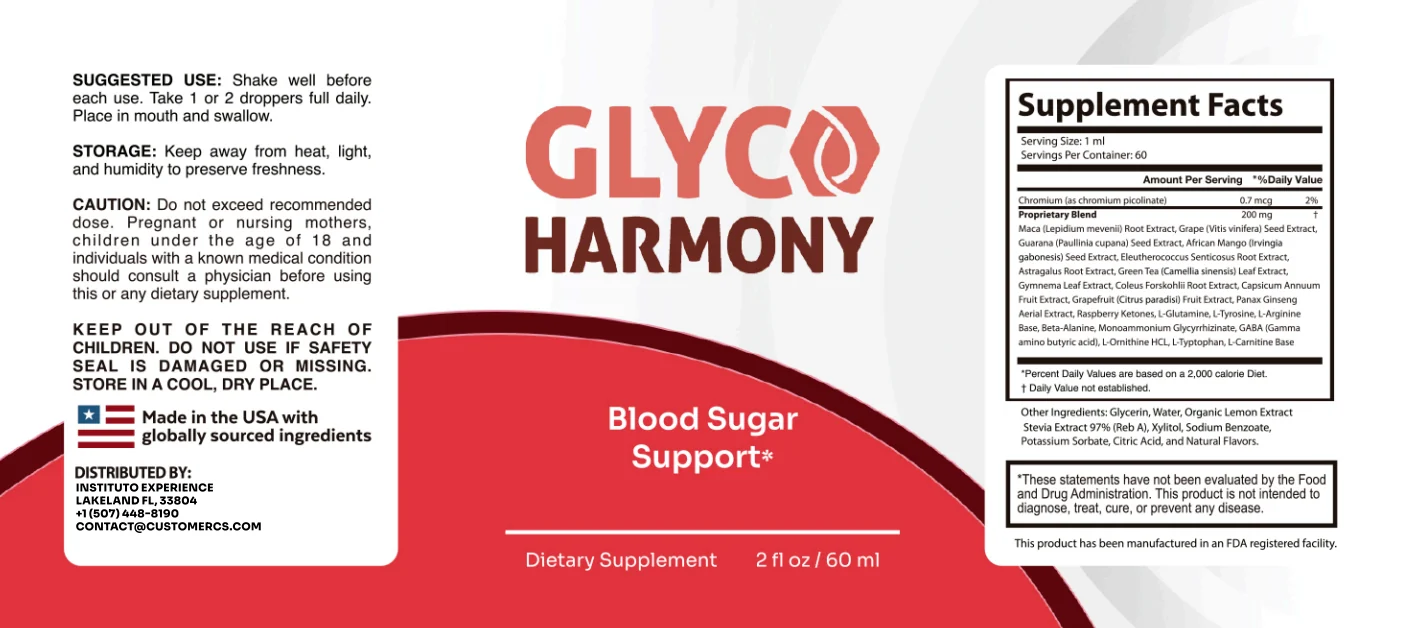
See how Glyco Harmony puts this together
A daily blood-sugar support blend in a liquid dropper — with every ingredient and its evidence laid out, so you can check the amounts against the research yourself.