Blood Sugar and Hormones: Women Over 40 Guide
Why does blood sugar get harder to manage for women after 40?
As women move through perimenopause, falling and fluctuating estrogen and progesterone can reduce insulin sensitivity, so blood sugar swings more easily even without diet changes. The fix is not a single pill but consistent sleep, strength training, protein-forward meals, and correcting shortfalls in nutrients like magnesium. Talk to a clinician before making changes.
- The driver: shifting estrogen and progesterone change how cells respond to insulin.
- Who notices it: women in perimenopause and the years around menopause.
- What helps most: sleep, muscle, balanced meals and fixing nutrient gaps — not a quick fix.
Why 40 can feel like a turning point
Many women reach their early forties and notice something they cannot quite name: the strategies that always kept their energy steady seem to work less reliably. Meals that never used to matter now leave them tired an hour later; the weight that used to shift with a week of effort settles more stubbornly around the middle. It is easy to blame willpower, but the more accurate explanation is biological. The hormonal environment that governs how the body handles glucose is starting to change, and blood sugar is one of the systems that feels it first.
This is not a story about disease. It is a story about a normal life transition — perimenopause and the years around it — that quietly shifts the odds. Understanding what is actually happening turns a frustrating mystery into a set of levers you can pull. And crucially, the most powerful levers are the ordinary ones, not a supplement bought in a panic.
The estrogen and insulin link
Estrogen does far more than regulate the menstrual cycle. It has a supporting role in how the body responds to insulin, the hormone that ushers glucose out of the blood and into cells. When estrogen is at healthy premenopausal levels, it appears to help keep insulin sensitivity in a favourable range and to encourage fat to be stored in less metabolically troublesome places, such as the hips and thighs rather than deep in the abdomen.
During perimenopause, estrogen does not simply glide downward. It fluctuates, sometimes wildly, before settling at the lower post-menopausal level. Those swings, and the eventual decline, are associated in research with a drift toward reduced insulin sensitivity (Mauvais-Jarvis et al., 2017). Progesterone, which also falls during this period, plays into the picture too. The practical upshot is that the body may need to produce more insulin to move the same amount of glucose — the early signature of insulin resistance — even when nothing about a woman's diet has changed.
It is worth being careful with the language here. These are associations and biologically plausible mechanisms, not a guarantee that every woman will experience the same thing. Some sail through with barely a ripple in their glucose; others notice a clear change. Genetics, baseline fitness, weight and lifestyle all shape how pronounced the shift becomes.
What perimenopause actually changes
The hormonal story is the headline, but it rarely acts alone. Several other midlife changes travel alongside it and amplify the effect on blood sugar. Seeing them laid out makes it obvious why this is a whole-body picture rather than a single broken part.
Muscle, fat and where it sits
From around the fourth decade, adults gradually lose muscle mass unless they actively work to keep it — a process called sarcopenia (Greendale et al., 2019). Muscle is the body's largest sink for glucose, so losing it reduces the tissue that soaks up sugar after meals. At the same time, the hormonal shift tends to redistribute body fat toward the abdomen. This visceral fat is more metabolically active and is itself linked to reduced insulin sensitivity. Less glucose-hungry muscle plus more visceral fat is a combination that nudges blood sugar in the wrong direction.
Sleep and stress
Perimenopause is notorious for disrupting sleep, whether through night sweats, more frequent waking or simply lighter, less restorative rest. Short or broken sleep is consistently associated with poorer glucose control the next day and with stronger cravings for quick carbohydrates. Add the reality that the forties are often peak years for career and caregiving pressure, and chronically elevated cortisol enters the mix. Cortisol raises blood sugar by design — it is part of the stress response — so a stretch of poor sleep and high stress can make readings feel unpredictable in ways that have nothing to do with what was on the plate.

Nutrients that support the picture
No supplement rewrites the hormonal transition, and any product that claims to is overselling. That said, a couple of nutrients have a reasonable evidence base for supporting normal glucose metabolism, and they are worth understanding — with expectations set honestly and a clinician in the loop.
Magnesium
Magnesium is a cofactor in the insulin-signalling pathway, and low magnesium status is consistently associated with reduced insulin sensitivity. Insufficiency also becomes more common with age, thanks to lower intakes, reduced absorption and higher losses. Correcting a genuine shortfall is a sensible, evidence-supported step that may modestly improve insulin sensitivity in people who are actually low — though it does little for those whose levels are already fine (Veronese et al., 2021). Food sources such as leafy greens, nuts, seeds and legumes come first; a modest supplement can close a remaining gap.
Inositol
Inositol, particularly the myo-inositol and D-chiro-inositol forms, has been studied mostly in the context of polycystic ovary syndrome (PCOS), where it is associated with improved insulin sensitivity and hormonal markers (Fitz et al., 2024). That research does not automatically transfer to every woman over 40, and the evidence outside PCOS is thinner. Still, its role in insulin signalling makes it a nutrient some women choose to discuss with their clinician. It is a supportive compound for normal metabolism, not a treatment, and it is best considered as part of a broader plan rather than a standalone answer.
| Nutrient | What the evidence suggests |
|---|---|
| Magnesium | Cofactor for insulin signalling; correcting a real deficiency may modestly help sensitivity |
| Inositol | Studied mainly in PCOS for insulin sensitivity; weaker evidence beyond that context |
| Fibre (from food) | Slows glucose absorption and steadies the post-meal rise |
| Protein (from food) | Supports muscle when paired with resistance training; blunts spikes |
A midlife routine that actually holds up
If the mechanisms sound complex, the response is refreshingly simple, because the same handful of habits pull on almost every lever at once. The single highest-value change for most women in this stage is resistance training — two or three sessions a week that build and preserve muscle. More muscle means more capacity to soak up glucose, and it directly counters the age-related decline that quietly erodes glucose control. It does not require a gym; bands, bodyweight and household weights all count.
The second lever is how meals are built. Leading with protein and fibre, and keeping refined carbohydrates in check, blunts the post-meal glucose rise and helps energy stay level. A short walk after eating adds a further, well-documented smoothing effect. The third lever is sleep: protecting it is not indulgent but metabolically active, since even a few poor nights can worsen next-day glucose handling. The fourth is stress management in whatever form is sustainable, to keep cortisol from doing the work of a bad diet.
Layered on top of those fundamentals, correcting a genuine nutrient shortfall — magnesium being the most common candidate — and discussing options such as inositol with a professional can play a supporting part. But the order matters. The habits do the heavy lifting; nutrients help around the edges. Any product marketed as a shortcut past the fundamentals should be treated with healthy scepticism.
What this is and is not
Here is the balanced bottom line. The tendency for blood sugar to become harder to regulate in midlife is real, well-described and driven by a combination of hormonal change, muscle loss, fat redistribution, sleep disruption and stress. That is empowering rather than discouraging, because most of those factors respond to ordinary, sustainable action. You are not fighting your own body so much as adjusting to its new operating conditions.
What this article is not is a diagnosis or a treatment plan. Persistent changes in energy, thirst, weight or any symptom that worries you deserve a proper assessment, including bloodwork, from a healthcare professional — not a self-directed supplement regimen. Hormone-related care, including any decision about hormone therapy, is firmly a clinical conversation. Used with that framing, the guidance here is a way to stack the odds in your favour, not a replacement for medical care.
Medical note: this article is general information, not medical advice. The nutrients discussed are for general nutritional support, not treatments for diabetes, perimenopause or any disease. Speak to a healthcare professional before starting a supplement or changing your routine, especially if you are taking medication, managing a health condition, or considering hormone therapy.
Scientific references
- Greendale GA, et al. “Changes in body composition and weight during the menopause transition.” JCI Insight, 2019
- Mauvais-Jarvis F, Manson JE, Stevenson JC, Fonseca VA. “Menopausal Hormone Therapy and Type 2 Diabetes Prevention: Evidence, Mechanisms, and Clinical Implications.” Endocrine Reviews, 2017
- Veronese N, et al. “Oral Magnesium Supplementation for Treating Glucose Metabolism Parameters in People with or at Risk of Diabetes: A Systematic Review and Meta-Analysis of Double-Blind Randomized Controlled Trials.” Nutrients, 2021
- NIH National Institute on Aging — What Is Menopause?
- NIH Office of Dietary Supplements — Magnesium: Fact Sheet for Health Professionals
- NIH NCCIH — Diabetes and Dietary Supplements: What You Need To Know
Why does blood sugar get harder to control after 40?
Several changes stack up in midlife. Estrogen, which helps cells respond to insulin, begins to fluctuate and decline during perimenopause, while muscle mass tends to fall and abdominal fat rises. Sleep is often disrupted and stress runs higher. Together these shift the body toward reduced insulin sensitivity, so glucose is handled less smoothly than it was at 30.
Does menopause affect insulin resistance?
Research links the menopausal transition with a tendency toward greater insulin resistance and changes in body-fat distribution, partly driven by falling estrogen. The effect varies a lot between individuals and overlaps with normal ageing, so menopause is best seen as one contributing factor rather than the sole cause. Lifestyle still has a strong influence on how the transition plays out.
What helps women manage blood sugar in midlife?
The highest-value habits are unglamorous: regular strength training to preserve muscle, protein and fibre with meals to blunt glucose spikes, prioritising sleep, and managing stress. Correcting genuine nutrient shortfalls, such as magnesium, can help, and some women discuss inositol with their clinician. None of these replace medical care, and changes should be personalised with a professional.
Can hormones cause glucose swings?
Hormones influence glucose, but rarely act alone. Estrogen and progesterone affect insulin sensitivity across the menstrual cycle and the menopausal transition, and stress hormones like cortisol can raise blood sugar. These shifts can make readings feel less predictable. If you notice consistent swings, keep a simple log and share it with a healthcare professional for proper assessment.
Related reading
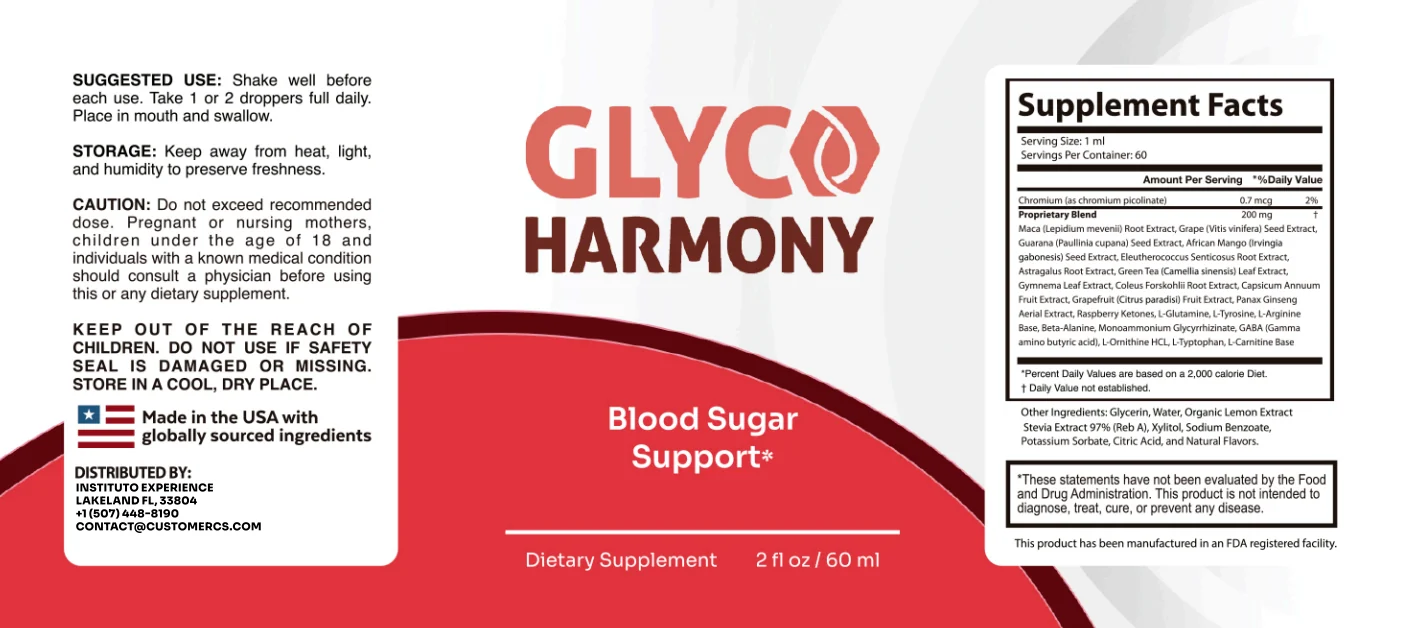
See how Glyco Harmony puts this together
A daily blood-sugar support blend in a liquid dropper — with every ingredient and its evidence laid out, so you can check the amounts against the research yourself.