Magnesium and Insulin Sensitivity: The Connection
Does magnesium help insulin sensitivity?
Magnesium is a cofactor in the insulin-signalling pathway, and low levels are consistently linked to insulin resistance. Trials suggest supplementing may modestly improve insulin sensitivity, especially in people who are deficient. A common form is magnesium glycinate at 200–400 mg daily, alongside magnesium-rich foods. It supports normal metabolism; it is not a diabetes treatment.
- The mechanism: magnesium is needed for insulin to signal properly inside cells.
- Who benefits most: people who are genuinely deficient — common over 40.
- Practical form: magnesium glycinate, 200–400 mg, is gentle and well tolerated.
Why magnesium keeps coming up in blood-sugar conversations
Magnesium is not a fashionable botanical or a trademarked extract. It is a plain, essential mineral involved in more than 300 enzyme reactions in the body, from energy production to muscle and nerve function. So why does it appear in almost every serious discussion of insulin sensitivity? Because a large body of observational research keeps finding the same pattern: people with lower magnesium status tend to have poorer insulin sensitivity, and people with higher intakes tend to fare better on glucose markers (Simental-Mendía et al., 2016).
That is a correlation, not a promise, and the distinction matters. Magnesium is not a drug that pushes blood sugar down on command. It is a nutrient your metabolism cannot run properly without — and when it runs short, the machinery of insulin signalling appears to work less smoothly. Understanding that difference is the whole point of this article.
The mineral behind the insulin signal
When insulin arrives at a cell, it docks onto a receptor and sets off a chain of chemical messages that ultimately tells the cell to pull glucose in from the blood. Several steps in that chain depend on magnesium. It acts as a cofactor for the enzymes (called tyrosine kinases) that pass the insulin message along, and it is required for the ATP — the cell's energy currency — that fuels these reactions in the first place.
In simple terms, insulin is the key, but magnesium helps the lock turn. When magnesium is adequate, the signalling cascade proceeds as it should. When it is low, researchers observe that cells can become less responsive to insulin — a state we call insulin resistance, where the body has to produce more insulin to achieve the same effect. This is the biologically plausible reason the mineral matters, and it is why the connection is taken seriously rather than dismissed as another supplement trend.
What deficiency has to do with insulin resistance
The evidence here is a two-way street, which is often missed. On one side, low magnesium is associated with reduced insulin sensitivity. On the other, poorly managed blood sugar itself increases how much magnesium the kidneys flush out in urine. That creates the possibility of a self-reinforcing loop: less magnesium, weaker insulin signalling, higher glucose, more magnesium lost. Breaking into that loop by correcting a genuine shortfall is a sensible idea — but only if a shortfall actually exists.
Intervention trials, where people are given magnesium and measured over time, generally point in a favourable direction, particularly among those who started out deficient or who had markers of insulin resistance (Veronese et al., 2021). The improvements in insulin sensitivity tend to be real but modest, and they are least impressive in people whose magnesium was already fine. That is the honest headline: magnesium helps most when it is fixing a deficit, and does little when there is no deficit to fix.
Why adults over 40 are often short
Magnesium insufficiency is more common than many people assume, and it becomes more likely with age. Several everyday factors stack up: modern diets built on refined grains and processed foods deliver less magnesium than whole-food diets; absorption from the gut tends to decline over the years while urinary losses can rise; and certain common medications, including some diuretics and acid-reducing drugs, can lower magnesium status. Higher alcohol intake and chronically high stress can nudge levels down too.
None of this means every adult over 40 is deficient. It means the odds of a quiet, sub-optimal magnesium status are higher in this group, and that a genuine shortfall can hide behind vague, non-specific symptoms. A blood test only tells part of the story, since most magnesium sits inside cells and bone rather than in the bloodstream, so clinicians often weigh diet and risk factors alongside any lab number.

Which form of magnesium to choose
Walk down a supplement aisle and you will meet a confusing roster of magnesium compounds. The practical thing to understand is that the label weight is not all absorbable, and different forms behave differently. Magnesium oxide is inexpensive and packs a lot of elemental magnesium per pill, but the body absorbs relatively little of it, and it has a pronounced laxative effect — which is why it shows up in some laxatives. For daily nutritional use, better-absorbed organic forms are usually preferred.
Magnesium glycinate (magnesium bound to the amino acid glycine) is a common choice for everyday supplementation because it is well tolerated and gentle on the stomach, making it easy to take consistently. Magnesium citrate and magnesium malate are also well absorbed, with citrate being a little more likely to loosen the bowels at higher doses. The form you pick matters less than the two things that really count: taking an adequate amount, and taking it consistently.
How much, and when
The recommended dietary allowance for magnesium is roughly 400–420 mg per day for adult men and 310–320 mg for adult women, counting food and supplements together. Supplemental doses used in studies typically land around 200–400 mg of elemental magnesium per day — and "elemental" is the word to watch, because it is the actual magnesium content, not the weight of the whole compound (NIH Office of Dietary Supplements). Splitting a dose or taking it with a meal can improve comfort, and taking it in the evening suits some people who find it relaxing.
| Form | Absorption & notes |
|---|---|
| Magnesium glycinate | Well absorbed, gentle on the stomach; popular for daily use |
| Magnesium citrate | Well absorbed; can be laxative at higher doses |
| Magnesium malate | Well absorbed; sometimes chosen for daytime use |
| Magnesium oxide | High elemental content but poorly absorbed; strongly laxative |
Food first: where magnesium actually comes from
Before reaching for a bottle, it is worth remembering that whole foods are the original magnesium supplement, and they deliver fibre and other nutrients alongside. The richest everyday sources are dark leafy greens such as spinach and Swiss chard, nuts and seeds (pumpkin seeds, almonds and cashews are standouts), legumes, whole grains, and even dark chocolate. A diet built around these can carry a large share of your daily needs without any pills at all.
For many people, the most reliable strategy is food first, supplement second: shore up the diet with magnesium-rich staples, then use a modest supplement to close any remaining gap if needed. This is also the most cost-effective approach, and it sidesteps the risk of overdoing supplemental magnesium, which mainly shows up as digestive upset well before anything more serious.
What magnesium can and cannot do
Here is the balanced bottom line. Magnesium has a clear, well-understood role in insulin signalling, and correcting a real deficiency is a legitimate, evidence-supported step that may modestly improve insulin sensitivity. That is genuinely useful, and it is why the mineral earns a place in the conversation about metabolic health — and why it appears in thoughtfully built blood-sugar support formulas.
What magnesium cannot do is act as a treatment for diabetes or a substitute for the fundamentals. It will not override a diet high in refined carbohydrates, it is not a replacement for prescribed medication, and it delivers little benefit in someone whose levels are already adequate. Think of it as removing a possible obstacle to healthy insulin function, not as a lever that forces blood sugar down. Used with that expectation, it is one of the more sensible, low-drama nutrients in the whole category.
Medical note: this article is general information, not medical advice. Magnesium is a dietary mineral for general nutritional support, not a treatment for diabetes or any disease. Speak to a healthcare professional before starting a supplement, especially if you have kidney problems or take medication such as certain diuretics, antibiotics or acid-reducing drugs, as magnesium can interact with them.
Scientific references
- Veronese N, et al. “Oral Magnesium Supplementation for Treating Glucose Metabolism Parameters in People with or at Risk of Diabetes: A Systematic Review and Meta-Analysis of Double-Blind Randomized Controlled Trials.” Nutrients, 2021
- Simental-Mendía LE, et al. “A systematic review and meta-analysis of randomized controlled trials on the effects of magnesium supplementation on insulin sensitivity and glucose control.” Pharmacological Research, 2016
- NIH Office of Dietary Supplements — Magnesium: Fact Sheet for Health Professionals
- NIH NCCIH — Diabetes and Dietary Supplements: What You Need To Know
- American Diabetes Association — About diabetes and standards of care
Does magnesium help with insulin resistance?
Magnesium is a cofactor in the insulin-signalling pathway, and low magnesium is consistently associated with insulin resistance in observational research. Several trials suggest that supplementing can modestly improve insulin sensitivity, with the clearest effect in people who are actually deficient. It is a supporting nutrient, not a treatment for diabetes, and works best alongside diet and activity.
Which form of magnesium is best for blood sugar?
For general use, well-absorbed organic forms such as magnesium glycinate, citrate or malate are usually preferred over magnesium oxide, which is cheap but poorly absorbed and more laxative. Glycinate is often chosen because it is gentle on the stomach and easy to tolerate daily. The form matters less than getting a consistent, adequate amount from food and, if needed, a supplement.
How much magnesium should I take daily?
The recommended dietary allowance is roughly 400 to 420 mg per day for adult men and 310 to 320 mg for adult women, from food and supplements combined. Supplemental doses in studies often fall around 200 to 400 mg of elemental magnesium daily. Because supplements can interact with medications and affect the bowels, confirm your amount with a healthcare professional.
Can low magnesium raise blood sugar?
Low magnesium does not directly raise blood sugar, but it is linked to reduced insulin sensitivity, which can make glucose harder to manage over time. The relationship also runs both ways: poorly controlled blood sugar increases magnesium loss through urine, which can deepen a deficiency. Correcting a genuine shortfall is sensible, but it is not a stand-alone fix.
Related reading
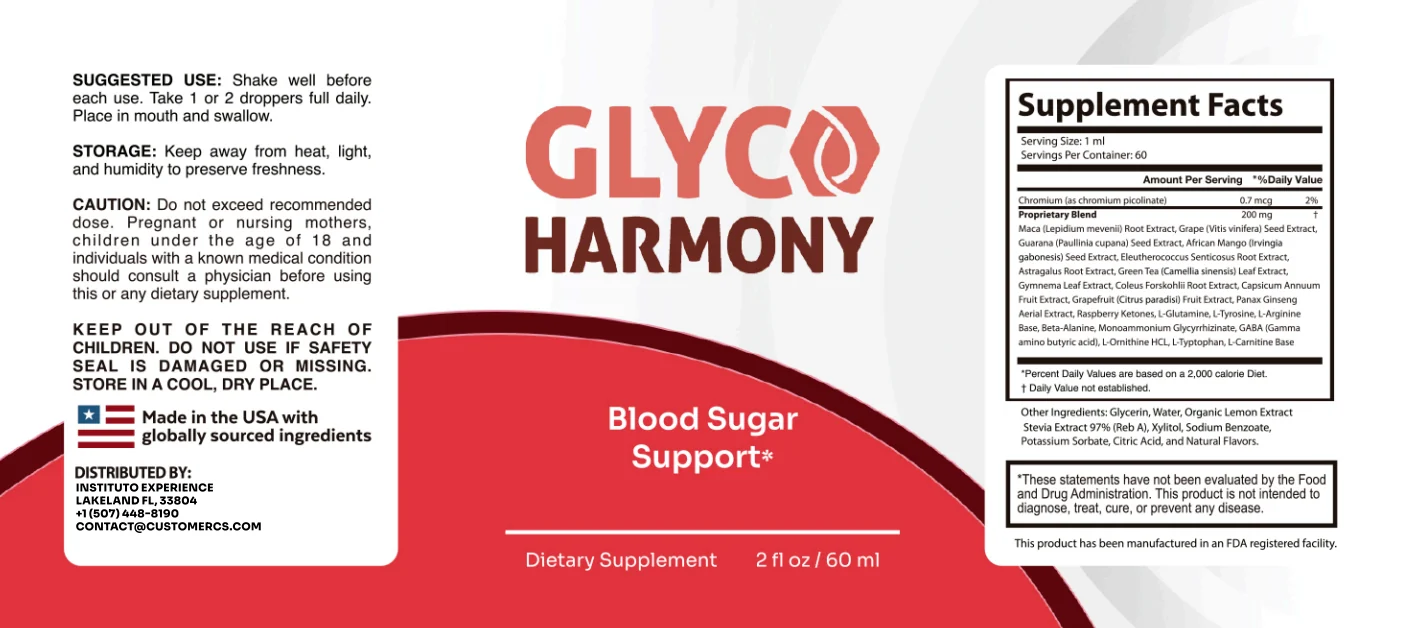
See how Glyco Harmony puts this together
A daily blood-sugar support blend in a liquid dropper — with every ingredient and its evidence laid out, so you can check the amounts against the research yourself.