Blood Sugar Numbers: What Your Readings Mean
What do my blood sugar numbers actually mean?
Three readings tell most of the story. Fasting glucose under about 100 mg/dL is generally normal; blood sugar in people without diabetes rarely rises much above 140 mg/dL after meals; and A1C reflects your three-month average, with under 5.7 percent considered normal. These are guideposts, not diagnoses — only a clinician can interpret your results.
- Fasting: under ~100 mg/dL is generally in the normal range.
- After meals: non-diabetic readings seldom exceed ~140 mg/dL.
- A1C: a three-month average; under 5.7% is generally normal.
Why one number never tells the whole story
Home meters and continuous sensors have made blood sugar readings easy to collect and easy to misread. A single figure on a screen feels definitive, but glucose is a moving target: it drifts with food, sleep, stress, exercise, illness and the time of day, and a reading that looks alarming in isolation can be perfectly ordinary in context. The goal of this article is to help you understand what the common numbers describe, so you can have a more informed conversation with a clinician — not to replace one.
That framing matters, so we will repeat it. The ranges below are widely used reference points, not personal verdicts. A number outside a range is a reason to ask a question, not to self-diagnose or to panic, and the person best placed to interpret your results is a healthcare professional who knows your history.
Fasting blood sugar
A fasting reading is taken after at least eight hours without food, which is why it is usually measured first thing in the morning. It reflects the baseline your body holds when it is not processing a meal. For most adults, a fasting glucose below about 100 mg/dL is generally considered to be in the normal range. Readings of roughly 100 to 125 mg/dL fall in what clinicians call the prediabetes range, and 126 mg/dL or higher, confirmed on repeat testing, points toward diabetes.
A single elevated morning reading is not a diagnosis. Fasting numbers can be nudged upward by a poor night's sleep, stress, illness, or the well-documented “dawn phenomenon”, in which hormones raise glucose in the early hours. That is exactly why the diagnostic ranges depend on repeated testing rather than a one-off result, and why a clinician looks at the trend rather than a single morning.
Post-meal (postprandial) blood sugar
After you eat, blood sugar rises as carbohydrate is digested, then falls as insulin moves glucose into cells. In people without diabetes, this rise is surprisingly contained: glucose rarely climbs much above about 140 mg/dL even after a substantial meal, and it typically returns toward baseline within two to three hours. That ~140 figure is a handy guidepost for what a healthy post-meal peak tends to look like.
Readings that repeatedly sit well above that a couple of hours after eating — and stay there — are worth raising with a clinician. But treat individual spikes with perspective. A large, carb-heavy meal can produce a bigger peak in almost anyone, and the height of a single spike matters less than the overall pattern: how high, how often, and how quickly things settle. We cover the nuance of spikes in a separate article, because they are widely misunderstood.

A1C: the three-month average
A1C (also written HbA1c) is different in kind from a spot reading. Rather than capturing a moment, it estimates your average blood sugar over roughly the previous three months, expressed as a percentage. It works because glucose attaches to haemoglobin in red blood cells, which live about three months, so the measurement reflects cumulative exposure. Below about 5.7 percent is generally considered normal, 5.7 to 6.4 percent is the prediabetes range, and 6.5 percent or higher on repeat testing suggests diabetes.
Because it is an average, A1C has two useful properties. It smooths out the day-to-day noise that makes single readings hard to interpret, and it cannot be gamed by one good or bad day. The flip side is that it moves slowly and hides variability: two people with the same A1C can have very different daily swings. That is why A1C and daily readings complement each other rather than compete, and why any change you make should be judged over months, not days.
What a healthy average looks like on a sensor
Continuous glucose monitors (CGMs) have added a newer perspective by tracking glucose around the clock (Hall et al., 2018). Data from people without diabetes wearing CGMs suggests that healthy average glucose often sits somewhere around 98 to 99 mg/dL, with most of the day spent in a fairly narrow band and only modest, short-lived rises after meals (Shah et al., 2019). It is a helpful mental picture: healthy blood sugar is not perfectly flat, but it is steady, and it does not spend long at the extremes.
A reference table of common ranges
| Measure | Normal | Prediabetes | Diabetes |
|---|---|---|---|
| Fasting glucose | Below ~100 mg/dL | ~100–125 mg/dL | 126 mg/dL or higher |
| Post-meal (2 hr) | Typically below ~140 mg/dL | ~140–199 mg/dL | 200 mg/dL or higher |
| A1C | Below ~5.7% | 5.7–6.4% | 6.5% or higher |
Reference ranges are widely used guideposts and can vary by source and individual. Diagnosis always depends on repeat testing and a clinician's judgement.
How the numbers fit together
The three measures answer different questions, which is why they are most useful read together. Fasting glucose asks, “where does my body settle at rest?” Post-meal readings ask, “how well do I handle food?” And A1C asks, “what has my average been over the season?” A reassuring picture usually shows agreement across all three; a confusing one — say a fine A1C but frequent high post-meal readings — is precisely the kind of thing worth taking to a clinician, because it may reflect variability an average conceals.
This is also why supplements, foods and habits should be judged against these markers over a fair stretch of time rather than a single reading. Because A1C reflects roughly three months, a genuine assessment of any change generally needs eight to twelve weeks, ideally with before-and-after numbers ordered and interpreted by your provider. Feeling a certain way on a given morning is not data; a tracked trend is.
When to seek professional interpretation
Numbers are tools, and like any tool they can be misused. If your readings sit outside the normal ranges, if they swing widely, if they conflict with each other, or if you simply are not sure what they mean, that is the moment to involve a healthcare professional rather than the internet. A clinician can order the right confirmatory tests, factor in your medications and history, and tell you whether a pattern is meaningful or merely a bad week. Understanding your numbers is worthwhile; interpreting them for a diagnosis is their job, not yours.
Medical note: this article is general education, not medical advice, and the ranges above are widely used reference points rather than personal diagnoses. Do not use them to self-diagnose or to start, stop or change any medication. If your readings concern you, or fall outside the normal ranges, speak to a qualified healthcare professional.
Scientific references
- Shah VN, et al. “Continuous Glucose Monitoring Profiles in Healthy Nondiabetic Participants: A Multicenter Prospective Study.” Journal of Clinical Endocrinology & Metabolism, 2019 — 153 participants aged 7 to 80
- Hall H, et al. “Glucotypes reveal new patterns of glucose dysregulation.” PLOS Biology, 2018
- American Diabetes Association — Diagnosis and blood sugar ranges
- U.S. CDC — Diabetes basics and testing
- NIH NIDDK — The A1C Test and Diabetes
What is a normal fasting blood sugar level?
For most adults, a fasting blood glucose below about 100 mg/dL is generally considered in the normal range, using a sample taken after at least eight hours without eating. Readings of roughly 100 to 125 mg/dL fall in the prediabetes range, and 126 mg/dL or higher on repeat testing points toward diabetes. Only a clinician can interpret your result in context.
What does my A1C number mean?
A1C estimates your average blood sugar over roughly the previous three months as a percentage. Below about 5.7 percent is generally considered normal, 5.7 to 6.4 percent is the prediabetes range, and 6.5 percent or higher on repeat testing suggests diabetes. Because it is an average, A1C smooths out day-to-day swings, which is why it complements rather than replaces daily readings.
What blood sugar reading is too high?
Context matters, but a useful guidepost is that blood sugar in people without diabetes rarely climbs much above about 140 mg/dL even after a meal. A fasting reading of 126 mg/dL or more, or a post-meal reading persistently above 140 to 180 mg/dL, is worth discussing with a clinician. A single high number is less telling than a pattern over time.
How often should I check my blood sugar?
It depends entirely on your situation. Someone without diabetes who is simply curious might check occasionally or use a short continuous-glucose experiment, while someone managing a diagnosis follows a schedule their clinician sets. There is no universal frequency, so the right answer comes from your own healthcare provider rather than a general rule.
Related reading
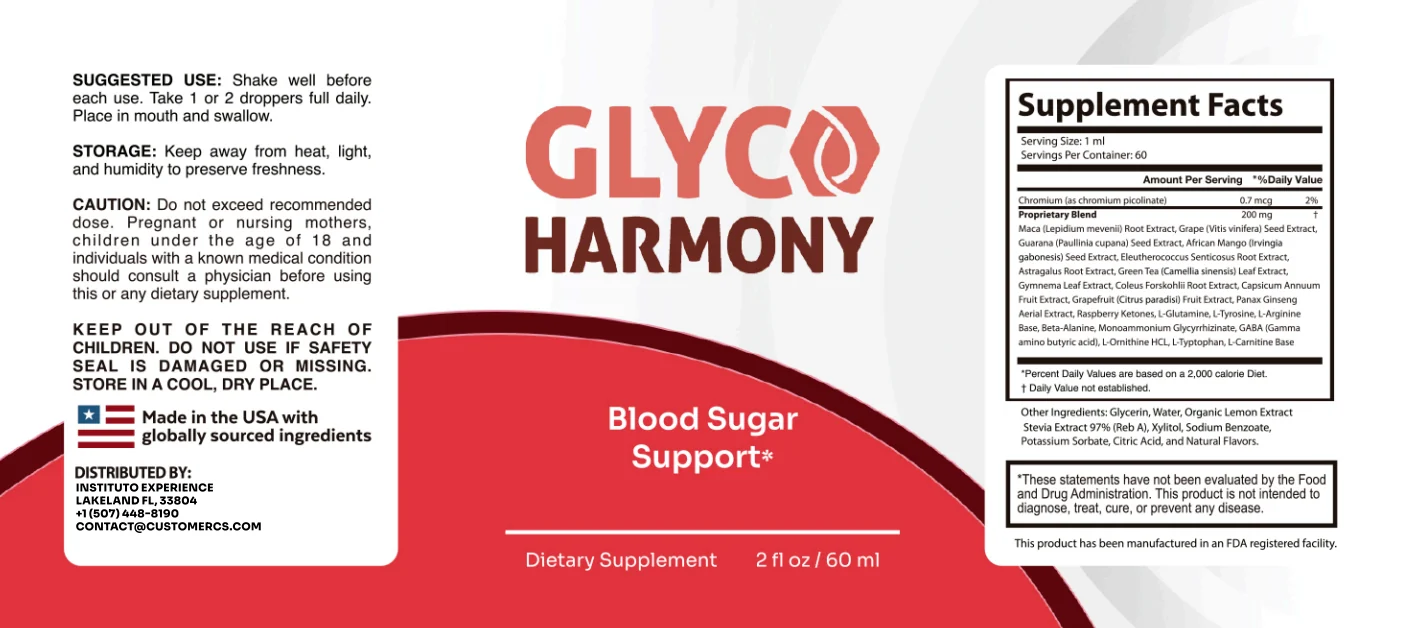
See how Glyco Harmony puts this together
A daily blood-sugar support blend in a liquid dropper — with every ingredient and its evidence laid out, so you can check the amounts against the research yourself.