How to Take Blood Sugar Support Drops: Dose, Timing and Routine
How do you take blood sugar support drops?
Shake the bottle, draw the pipette to its marked line, place the contents in your mouth and swallow — once daily, at the same time each day. A liquid supplement is dosed in millilitres rather than capsules, so the serving size on the panel is the number that counts, not how full the glass tube looks. Give any blood-sugar formula eight to twelve weeks before judging it, and clear it with your clinician if you take glucose-lowering medication.
- The dose: whatever the panel states in millilitres, usually 1 ml.
- The timing: consistent beats clever — pick a time you will keep.
- The test: eight to twelve weeks, judged on your clinician's numbers.
Why liquid drops are dosed differently from capsules
A capsule is a solved problem. Someone else measured the powder, sealed it, and printed the amount on the bottle; your only job is to count capsules. A dropper hands part of that job back to you. The bottle states a serving in millilitres, the pipette is the measuring instrument, and how much you actually swallow depends on how you use it. That is the whole reason a liquid needs its own set of instructions.
The trade-off is real in both directions. Liquids can be easier to swallow than a horse-pill capsule, easier to split into a half dose, and they suit anyone who dislikes tablets. But they are also less precise by nature, they usually contain fewer total milligrams of active material than a packed capsule, and they generally have a shorter shelf life once opened. None of that makes drops better or worse than capsules — it makes them different, and worth measuring properly.
What does “one full dropper” actually mean?
A full dropper means the pipette drawn up to the line marked on the glass, not filled to the very top. On a 60 ml bottle sold as 60 servings of 1 ml, one full dropper is 1 ml. This is the single most common dosing error with liquid supplements, and it goes in the direction people never suspect: one squeeze of the rubber bulb typically pulls the liquid only part of the way up the tube, so a great many people take half of what they believe they are taking. Squeeze the bulb fully, release it slowly, and check the level against the mark.
| What the label says | What it means in practice |
|---|---|
| Serving size 1 ml | One full dropper, drawn to the marked line |
| 60 servings per container | A 60 ml bottle lasts 60 days at one serving daily |
| “One or two full droppers” | A range the label permits — start at the lower end |
| “Shake well before use” | Not optional: botanical extracts settle between doses |
| “Do not exceed recommended dose” | A ceiling, not a suggestion |
Should you take blood sugar drops with food or on an empty stomach?
For a single-ingredient supplement this question has a real answer, and it differs by ingredient. Berberine is studied taken with meals, split into two or three doses across the day, which places its activity near the glucose rise that follows eating (Guo et al., 2021). Alpha-lipoic acid runs the other way: food measurably reduces how much of it reaches the bloodstream, which is why it is usually taken well away from a meal (Gleiter et al., 1996).
A multi-botanical blend cannot satisfy both rules at once, and that is worth saying plainly rather than pretending otherwise. When a formula contains ingredients with conflicting timing preferences, no single instruction is optimal for all of them, and the label picks one. Follow it, keep it identical day to day, and spend your effort on adherence instead. We work through the ingredient-by-ingredient version of this in our guide to the best time to take blood sugar supplements.
What time of day should you take blood sugar support drops?
For a general botanical blend, there is no clock time with evidence behind it, and any page that names one confidently is inventing precision it does not have. What the evidence does support is unglamorous: pooled analyses of nutrient supplements for glycaemic control describe modest effects that depend on sustained daily intake rather than clever scheduling (Kim et al., 2022). A dose you take every day at a mediocre time comfortably beats a perfectly timed dose you take four days a week.
Two practical considerations do apply. If the formula contains a caffeine source — guarana and green tea both qualify, and both are common in this category — morning is the sensible default, because an evening dose can interfere with sleep, and short sleep worsens insulin sensitivity in its own right. And if you take prescription medication, ask your pharmacist whether spacing the supplement away from it is advisable, since some botanicals affect absorption.
How do you take Glyco Harmony drops specifically?
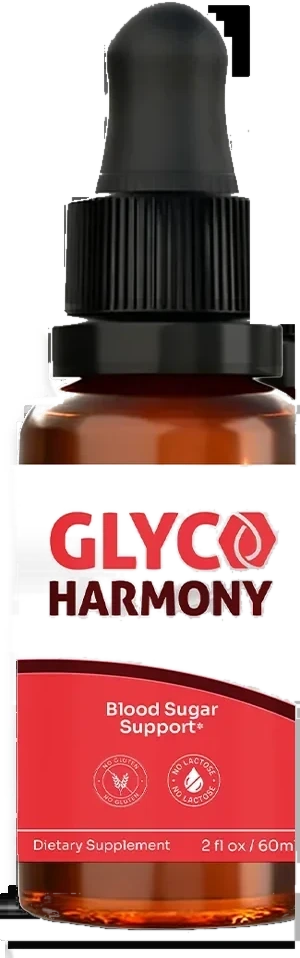
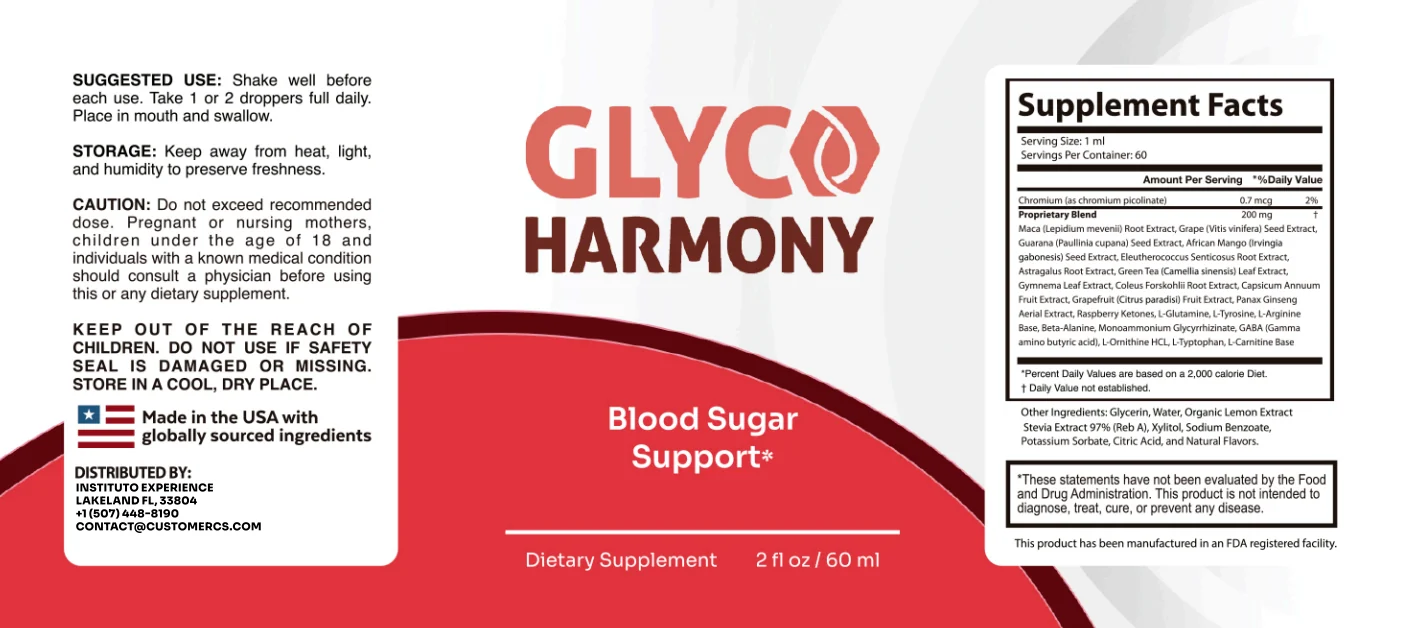
Glyco Harmony is sold as liquid drops only — not capsules and not gummies. Its label directs you to shake well and take one or two full droppers daily, placed in the mouth and swallowed. One serving is 1 ml, and a 2 fl oz (60 ml) bottle is counted as 60 servings. Each serving supplies 0.7 mcg of chromium as chromium picolinate plus a 200 mg proprietary blend led by gymnema, maca, African mango, green tea, guarana and Panax ginseng. The label also says not to exceed the recommended dose, and that pregnant or nursing women, under-18s and anyone with a medical condition should speak to a physician first.
Two label details deserve to be read carefully rather than skimmed. The first is the chromium figure: 0.7 mcg is a small fraction of the amounts used in chromium trials, which run to hundreds of micrograms, and pooled results at those research doses were themselves mixed — a significant reduction in HbA1c, but none in fasting glucose or lipids (Zhao et al., 2022). The second is that the 200 mg blend is proprietary, so the amount of each botanical inside it is undisclosed and cannot be compared against any published trial. Neither point makes the product a fraud; both mean the honest expectation is modest. The full ingredient panel and pricing sit on our Glyco Harmony page.
Because guarana is a caffeine source, this is not a caffeine-free formula, which is the practical argument for taking it earlier in the day. And because the blend is led by gymnema, one nuance is worth knowing: gymnema's best-documented effect is on sweet-taste receptors and requires contact with the tongue, so drops swallowed straight down will not reproduce it. We cover that mechanism, and what the chromium evidence supports, in our piece on what the gymnema and chromium evidence shows.

How long before blood sugar support drops do anything?
Give it eight to twelve weeks. That window is not a marketing hedge; it reflects how the outcomes are measured. HbA1c represents roughly three months of average blood glucose, so it physically cannot register a change made last Tuesday, and the trials that reported movement in fasting glucose generally ran for eight to twelve weeks before measuring. Judging a supplement at day ten is judging your adjustment period, not the formula.
The corollary is how to judge it. “I feel like I have more energy” is not a blood-sugar result — it is a mood, and it responds to expectation as readily as to chemistry. A fair test is a before-and-after set of numbers from your clinician, taken either side of a consistent eight-to-twelve-week run, with your diet and activity roughly unchanged in between. If nothing moved, that is an answer worth having.
Can you take two droppers instead of one?
Only where the label explicitly permits a range, and even then there is no reason to assume the top of the range is better. Supplement dose-response is not a straight line: past the amount studied, the usual outcome is more side effects rather than more benefit. With a proprietary blend there is a further problem — you cannot know what you are doubling, because the individual amounts inside the 200 mg total are not disclosed. Doubling an undisclosed blend is doubling an unknown.
The exception that matters most is medication. Several blood-sugar botanicals can add to the effect of glucose-lowering drugs, and the risk of stacking them is not theoretical. If you take metformin, a sulfonylurea, insulin or any other glucose-lowering prescription, the dose question belongs to your clinician, not to a label.
What the evidence supports, and what it does not
What it supports: that timing genuinely matters for a few specific ingredients — berberine with meals, alpha-lipoic acid away from them; that consistency of intake, not the hour, is what pooled supplement analyses actually reward; and that glycaemic markers need weeks, not days, to move.
What it does not support: that any particular clock time optimises a mixed botanical blend; that drops absorb better than capsules in a way that has been demonstrated for these ingredients; that a bigger dropper dose produces a proportionally bigger effect; or that the finished blend in any liquid product has been tested as sold. Ingredient evidence never transfers automatically to a finished formula, which is the recurring theme in our look at whether blood sugar supplements actually work.
Five mistakes that quietly ruin a supplement routine
Not shaking the bottle. Botanical extracts separate. An unshaken bottle delivers a weak dose at the start and a concentrated one at the end, and neither resembles the serving on the panel.
Half-filling the pipette. Covered above, and worth repeating because it is so common: one squeeze is usually not a full dropper. Draw to the line.
Storing it on a sunny windowsill. Heat and light degrade plant extracts. A cool, dry cupboard costs nothing and preserves what you paid for.
Stopping at week three. The most frequent reason a blood-sugar supplement “does not work” is that it was abandoned before the measurement window it needed.
Buying on the front of the box. The panel, not the packaging, tells you whether the amounts resemble anything that has been studied — the discipline we set out in our guide to choosing a blood sugar supplement. If berberine is the ingredient you actually want, its dosing has its own rules, laid out in our berberine dosage and timing guide.
Who should ask a clinician before starting?
Anyone taking glucose-lowering medication, anyone pregnant or nursing, anyone under 18, and anyone managing a diagnosed condition such as diabetes, thyroid disease, or kidney or liver impairment. That is not boilerplate: blood-sugar botanicals are the category most likely to interact with a prescription precisely because they aim at the same system the prescription does. Bring the actual bottle to the appointment so the full ingredient list can be read, and never adjust a prescribed medicine on your own.
Medical note: this article is general information about how to dose a dietary supplement, not medical advice, and no supplement described here treats, prevents or cures diabetes or any other disease. Speak to a healthcare professional before starting, especially if you take glucose-lowering medication, and never change a prescription on your own.
Scientific references
- Gleiter CH, et al. “Influence of food intake on the bioavailability of thioctic acid enantiomers.” European Journal of Clinical Pharmacology, 1996 — thioctic acid is alpha-lipoic acid
- Guo J, et al. “The Effect of Berberine on Metabolic Profiles in Type 2 Diabetic Patients: A Systematic Review and Meta-Analysis of Randomized Controlled Trials.” Oxidative Medicine and Cellular Longevity, 2021 — 46 trials assessed
- Zhao F, et al. “Effect of Chromium Supplementation on Blood Glucose and Lipid Levels in Patients with Type 2 Diabetes Mellitus: a Systematic Review and Meta-analysis.” Biological Trace Element Research, 2022 — 10 randomised trials, 509 patients
- Kim Y, Keogh JB, Clifton PM. “Could nutrient supplements provide additional glycemic control in diabetes management? A systematic review and meta-analysis of randomized controlled trials.” Archives of Pharmacal Research, 2022
- NIH Office of Dietary Supplements — Chromium: Fact Sheet for Health Professionals
- NIH NCCIH — Diabetes and Dietary Supplements: What You Need To Know
- American Diabetes Association — About diabetes and standards of care
How do you take blood sugar support drops?
Shake the bottle, squeeze the bulb to draw liquid into the pipette, place the contents in your mouth and swallow. Liquid supplements are dosed by dropper rather than by capsule, so the serving size on the panel — usually stated in millilitres — is the number that matters, not how full the pipette looks.
How much is one full dropper?
A full dropper normally means the pipette drawn to its marked line, not to the top of the glass tube. On a 60 ml bottle labelled as 60 servings of 1 ml, one full dropper is 1 ml. Squeezing the bulb once rarely fills the pipette completely, which is why people routinely take less than they think.
Should you take blood sugar drops with food or on an empty stomach?
It depends on the ingredients. Berberine is studied taken with meals, and alpha-lipoic acid is absorbed better away from food. A mixed botanical blend has no single correct answer, so follow the label first and keep the timing the same every day.
How do I take Glyco Harmony?
Shake well, then take one or two full droppers daily, placed in the mouth and swallowed. One serving is 1 ml and a 2 fl oz bottle holds 60 servings. The label says not to exceed the recommended dose.
What time of day is best to take blood sugar support drops?
There is no proven best hour for a general botanical blend. The time that works is the one you will not forget, so anchor it to something you already do daily. If the formula contains a caffeine source such as guarana, taking it in the morning rather than the evening is the sensible default.
How long before blood sugar support drops do anything?
Allow eight to twelve weeks of consistent daily use before judging any effect, and measure it with numbers from your clinician rather than how you feel on a given morning. Marketing that promises a change in days is not describing how these ingredients behave in trials.
Can you take two droppers instead of one?
Only if the label allows it. Doubling a dose does not double a benefit, and with a proprietary blend you cannot tell what you are doubling because the individual amounts are undisclosed. Never exceed the stated serving, and check with a healthcare professional first.
Related reading
See how Glyco Harmony puts this together
A once-daily blood-sugar support blend in a liquid dropper — every amount on the label, and every claim checked against the evidence.