Blood Sugar Vitamin Supplement Pairings: Biotin With Chromium
Why is biotin paired with chromium, and does it matter?
Biotin and chromium are combined in a blood sugar vitamin supplement because both are involved in normal carbohydrate metabolism on paper, both are cheap, and a two-nutrient pairing looks more substantial on a label than either alone. The clinical evidence that the combination improves glucose outcomes is thin and mostly comes from small studies. The more consequential issue rarely appears on the box: high-dose biotin can interfere with common laboratory blood tests and produce results that are falsely high or falsely low (Dasgupta, 2022).
- On paper: chromium is linked to insulin action, biotin to carboxylase enzymes in carbohydrate handling.
- In practice: deficiency of either is uncommon on a normal diet, so supplementing rarely corrects a real shortfall.
- The catch: biotin at supplement-level doses can distort immunoassay lab results — tell your clinician and the lab what you take.
Why a blood sugar vitamin supplement pairs biotin with chromium
Look along a shelf of glucose-support products and the biotin-and-chromium combination appears again and again, often as the only two nutrients with actual daily values printed beside them. There are three honest reasons for that, and only one of them is scientific.
The scientific reason is mechanistic overlap. Chromium is an essential trace mineral associated with insulin action; biotin, vitamin B7, is a cofactor for carboxylase enzymes that participate in gluconeogenesis and fatty acid synthesis. Both therefore have a legitimate textbook connection to how the body handles carbohydrate, which makes the pairing tellable in a sentence.
The second reason is commercial. Both are inexpensive, both are stable, and both are permitted at doses far above their daily values, so a manufacturer can print a large percentage next to each without cost or regulatory difficulty. The third reason is presentational: a label showing two nutrients at several hundred percent of the daily value reads as generous, even when the underlying nutrients were never in short supply.
None of that makes the pairing wrong. It does mean the pairing exists for reasons that are only partly about evidence, which is the right frame for reading the rest of this article.
What chromium brings on paper
Chromium's story rests on its proposed role in supporting insulin signalling — the idea that adequate chromium helps insulin move glucose into cells efficiently. It is an essential trace mineral, the adequate intake for adults sits at roughly 20 to 35 micrograms per day depending on age and sex, and ordinary diets containing broccoli, whole grains, meat and some fruits generally supply that amount.
The gap between the mechanism and the outcome is where the story weakens. When randomised trials of chromium supplementation are pooled, the pattern is inconsistent and the effects on glucose markers have generally not reached significance in people who are not deficient (Zhao et al., 2022). We covered that literature in detail in our piece on what the gymnema and chromium evidence supports, and the short version is that chromium is a reasonable supporting nutrient and a poor headline claim.
Form matters somewhat. Chromium picolinate is the most-studied supplemental form and is generally better absorbed than chromium chloride, which is why it dominates labels. Better absorption of a nutrient most people already get, however, is a modest achievement.
What biotin brings on paper
Biotin is a water-soluble B vitamin and a cofactor for five carboxylase enzymes, several of which sit in pathways relevant to carbohydrate and fat metabolism. Genuine biotin deficiency is rare in people eating a varied diet: it is found in eggs, nuts, seeds, fish, meat, some vegetables, and it is also produced by gut bacteria (NIH Office of Dietary Supplements). Deficiency does occur — in specific inherited enzyme disorders, with long-term consumption of large amounts of raw egg white, and in some other clinical situations — but it is not a common finding in the general population.
The adequate intake for adults is small, and the daily value used on supplement labels is 30 micrograms. Supplements routinely contain 5,000 or 10,000 micrograms, marketed for hair, skin and nails. That is not a rounding difference; it is hundreds of times the labelled daily value, and it is the reason the laboratory issue further down this page exists at all.
As for glucose outcomes specifically: studies of biotin combined with chromium picolinate exist, several of them small, and the results have not established a reliable benefit. Biotin's inclusion in glucose formulas is better understood as plausible and harmless-looking than as demonstrated.
Checking what is actually in a formula?
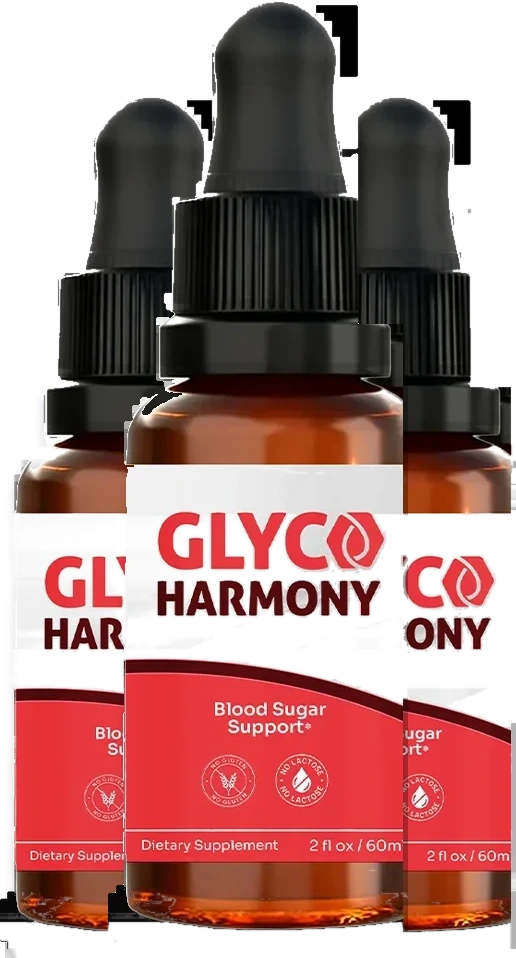
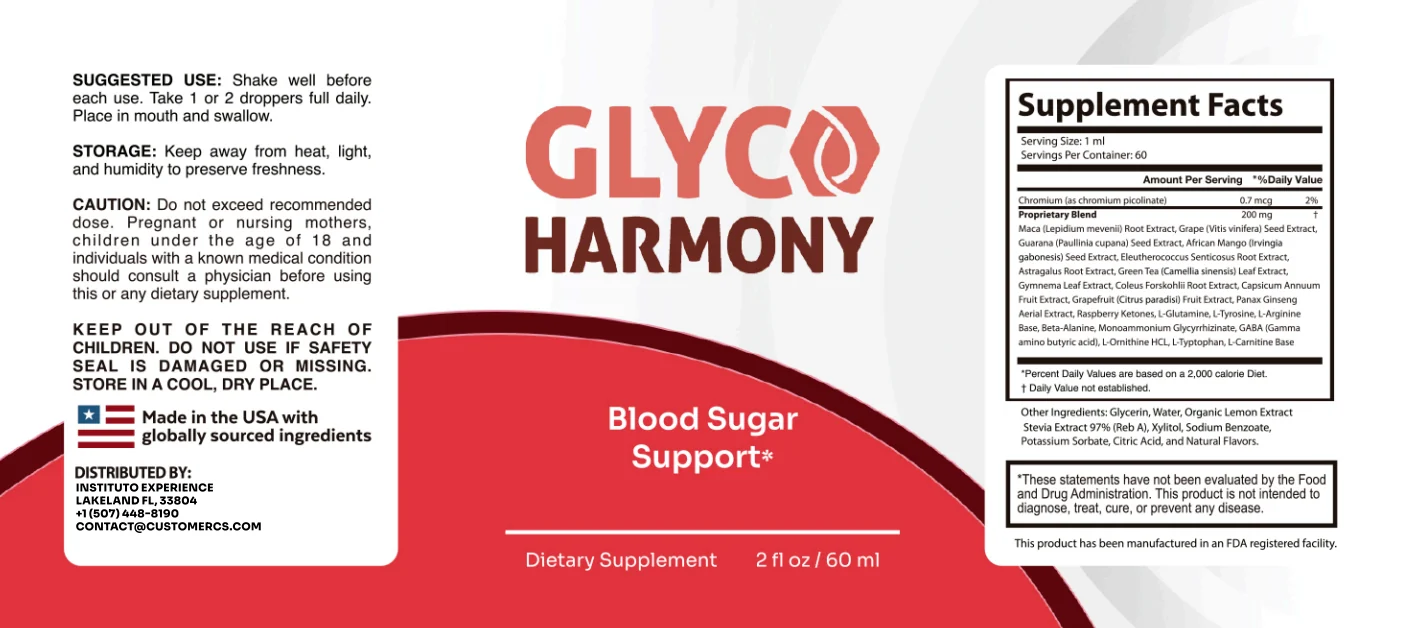
Glyco Harmony lists chromium as chromium picolinate with its percentage of the daily value, alongside a 200 mg botanical blend led by gymnema, maca, African mango, green tea and ginseng — and it carries no biotin at all. If you are comparing candidates for the best blood sugar support vitamins, the panel is where the comparison should start.
See the Official Supplement FactsThe dose gap: daily values versus what is actually sold
The single most clarifying exercise with any vitamin or mineral pairing is to put the recommended amount next to the sold amount. The gap explains most of the marketing.
| Nutrient | Adult daily value on labels | Common supplement amount | Typical multiple of the daily value | Why the gap exists |
|---|---|---|---|---|
| Biotin (vitamin B7) | 30 mcg | 5,000–10,000 mcg | Roughly 170–330 times | Marketed for hair, skin and nails; cheap and water-soluble |
| Chromium (as picolinate) | 35 mcg | 200–1,000 mcg | Roughly 6–29 times | Trial doses were set above dietary intake to test an effect |
| Chromium in a broad blend | 35 mcg | Often well under the daily value | Below 1 times | Included for completeness rather than as the active dose |
| Biotin in a hair or nail product | 30 mcg | 10,000 mcg | Roughly 330 times | The dose most associated with laboratory interference |
Two conclusions fall out of that table. If a nutrient is present far below its daily value, it is a label decoration rather than an intervention. If it is present at hundreds of times the daily value, the relevant question stops being "is this enough?" and becomes "what else does this dose do?" For biotin, there is a specific and well-documented answer.
The problem nobody prints on the label: biotin and lab tests
A large share of routine blood tests are immunoassays, and many immunoassay platforms use the extremely strong bond between biotin and streptavidin as part of how they capture and detect the substance being measured. When a person has taken a high-dose biotin supplement, circulating biotin can compete with that binding step and distort the result.
The distortion is not random noise. Depending on whether the assay is built as a "sandwich" or a "competitive" format, excess biotin pushes results in a predictable direction — falsely low in some assays, falsely high in others. The United States Food and Drug Administration has issued safety communications about this, and the NIH Office of Dietary Supplements covers it in its biotin fact sheet, because the consequences can be clinically serious rather than merely inconvenient.
A supplement that does nothing measurable for glucose can still change what your bloodwork says. That is an unusual kind of risk, and it belongs in the conversation with your clinician rather than in the small print of a marketing page.
Thyroid testing is the classic illustration: high-dose biotin can push thyroid hormone results up and thyroid-stimulating hormone down, producing a pattern that mimics an overactive thyroid in someone whose thyroid is fine. Cardiac troponin is the more dangerous one, because interference in that direction can make a genuinely elevated result look normal. Which tests are affected on which platform varies by manufacturer, which is precisely why the question belongs to the laboratory rather than to a supplement label.

What to do before bloodwork
The handling of this is straightforward once you know it exists, and it comes down to disclosure and timing.
Disclose. Tell the clinician ordering the test, and the phlebotomist or laboratory if you can, that you take a biotin-containing supplement and at what dose. Photograph the supplement facts panel — it is faster and more accurate than trying to recall ingredient names, and it captures everything else in the formula at the same time.
Pause, on advice. Laboratories commonly advise stopping high-dose biotin for a period before a blood draw (Gifford et al., 2019). Because biotin is water-soluble and cleared reasonably quickly, the required interval is usually short, but the right number depends on the dose taken and the specific assay in use, and published guidance varies. Ask the ordering clinician or the laboratory what interval they want rather than picking one from an article — including this one.
Do not stop a prescription. Pausing a supplement before a test is routine. Pausing a medication is not, and it is not a decision to make alone.
Re-test if something looks strange. If a result arrives that does not fit the clinical picture — a startling thyroid panel in someone with no symptoms, for instance — biotin interference is one of the explanations a clinician can check by repeating the test after a wash-out.
Medical note: this article is general information, not medical advice. Biotin and chromium are dietary nutrients for nutritional support; they are not intended to diagnose, treat, cure or prevent any disease. Never delay care or change a prescription because of anything read here, and discuss supplements with a healthcare professional before laboratory testing or surgery.
What this pairing cannot do
Biotin with chromium cannot be relied on to lower blood sugar. The pooled evidence for chromium alone has not shown a consistent effect in people who are not deficient, and adding biotin has not changed that picture in a way large, independent trials have confirmed.
It cannot correct a deficiency that most people do not have. Both nutrients are widely available in ordinary food, and taking hundreds of times the daily value of a nutrient you are not short of does not produce hundreds of times the benefit — that is not how nutrient sufficiency works.
It cannot substitute for the things that reliably influence glucose response: the composition and timing of meals, movement after eating, sleep, and medical management where that applies. Our piece on what walking after meals does to glucose covers one of those levers, and it is a more evidenced intervention than most capsules in this category.
And biotin specifically cannot be treated as consequence-free at high doses, because of the laboratory interference described above. "Water-soluble, so the excess is excreted" is a true statement about safety that quietly skips over what the excess does on its way out.

What to check on a label before you buy
Start with the two numbers that carry information: the amount of each nutrient and its percentage of the daily value. A chromium listing well under 100% of the daily value is a completeness gesture, not a dose. A biotin listing in the thousands of micrograms is the one to flag before any blood test.
Then read what sits below the vitamins. In most glucose formulas the botanical content lives inside a proprietary blend, where the total weight is disclosed but individual amounts are not — which caps what you can verify. Ingredients are listed in descending order by weight, so the first few names carry most of the mass, and a long list under a small total tells you the tail is present in token amounts. That reading skill transfers to every product in the category, and it is the backbone of our guide to choosing a blood sugar formula.
Finally, match the product to your circumstances rather than to its adjectives. If you have regular bloodwork, a formula without high-dose biotin removes a variable. Glyco Harmony is one such formula: its panel lists chromium as chromium picolinate at a stated percentage of the daily value, together with a 200 mg botanical blend led by gymnema, maca, African mango, green tea and ginseng, taken as daily drops. It carries no biotin, and its chromium sits below the daily value rather than at a multiple of it — two facts we would rather state plainly than leave you to discover. Whether that suits you is a decision for you and your clinician, made with the full panel in view.
Scientific references
- Dasgupta A. “Immunoassay design and biotin interference.” Advances in Clinical Chemistry, 2022
- Gifford JL, et al. “Strategies for mitigating risk posed by biotin interference on clinical immunoassays.” Clinical Biochemistry, 2019
- Zhao F, et al. “Effect of Chromium Supplementation on Blood Glucose and Lipid Levels in Patients with Type 2 Diabetes Mellitus: a Systematic Review and Meta-analysis.” Biological Trace Element Research, 2022 — 10 randomised trials, 509 patients
- NIH Office of Dietary Supplements — Biotin: Fact Sheet for Health Professionals
- NIH Office of Dietary Supplements — Chromium: Fact Sheet for Health Professionals
- Mayo Clinic — Biotin: uses, dosing and interactions
- Harvard T.H. Chan School of Public Health — Biotin (Vitamin B7)
Why are biotin and chromium combined in blood sugar supplements?
Both have a textbook connection to carbohydrate metabolism: chromium is associated with insulin action, and biotin is a cofactor for carboxylase enzymes involved in glucose and fatty acid pathways. Both are also inexpensive, stable and permitted well above their daily values, so the pairing is easy to print on a label. The clinical evidence that the combination improves glucose outcomes remains thin and comes mostly from small studies.
Does biotin interfere with blood tests?
Yes, at supplement-level doses it can. Many routine blood tests are immunoassays that use the strong bond between biotin and streptavidin as part of their detection step, and circulating biotin from a high-dose supplement can compete with that step. Depending on the assay format the result can be falsely high or falsely low. Thyroid panels and cardiac troponin are the most cited examples.
How long before bloodwork should I stop taking biotin?
Ask the clinician ordering the test or the laboratory running it, because the right interval depends on the dose you take and the specific assay in use, and published guidance varies. Biotin is water-soluble and cleared reasonably quickly, so the interval is usually short. Pausing a supplement before a test is routine, but never pause a prescribed medication without medical advice.
How much biotin and chromium do I actually need?
The daily value used on supplement labels is 30 micrograms for biotin and 35 micrograms for chromium, and ordinary varied diets generally supply both. Deficiency of either is uncommon. Supplements often contain biotin in the thousands of micrograms and chromium in the hundreds, which is many times the labelled daily value without a corresponding increase in benefit for people who were not short of them.
Related reading
See how Glyco Harmony puts this together
A once-daily liquid with the whole panel printed on the label — forms, amounts and daily-value percentages — so you can run the same checks this article describes before anything reaches your cupboard.