Blood Sugar Herbal Supplements: Bitter Melon Under the Lens
Does bitter melon do anything for blood sugar?
Bitter melon is a tropical gourd, Momordica charantia, that has been eaten as a vegetable and used in traditional herbal practice across Asia, Africa and the Caribbean for centuries, and it now turns up in a large share of blood sugar herbal supplements. The honest position is that the human evidence is preliminary: the trials that exist are mostly small, short and inconsistent, and major health bodies describe the evidence as insufficient rather than convincing. It may offer modest nutritional support for some people, but it is not a treatment and should never displace medical care.
- The claim: compounds in the fruit and seed behave a little like insulin or improve glucose uptake — interesting in the lab, unproven in people.
- The evidence: small human trials with mixed results; public health bodies call the evidence insufficient.
- The catch: fruit, seed and whole-plant extracts are different products, and no agreed standard makes two labels comparable.
Why bitter melon keeps appearing in blood sugar herbal supplements
Walk the label of almost any botanical glucose formula and you will meet the same short list: cinnamon, gymnema, berberine, chromium, and very often bitter melon. Its presence is not random. Bitter melon has one of the longest continuous traditional-use records of any plant associated with glucose, it is a genuine food crop rather than an exotic isolate, and its bitter taste gives it an intuitive "medicinal" credibility that formulators like. It is also cheap and easy to source.
Laboratory work supplies the second half of the story. Researchers have isolated several compounds from the plant — charantin, a group of cucurbitane-type triterpenoids, and a protein sometimes called polypeptide-p that was nicknamed "plant insulin" decades ago for its structural resemblance to the hormone. In cell and animal models these compounds have been reported to influence glucose uptake and related signalling. That is a legitimate reason to study a plant. It is not, on its own, a reason to promise anything, and the distance between a promising cell-culture result and a measurable change in a person is where most botanical stories quietly end.
So the sensible way to read bitter melon on a label is this: it is there because it is plausible, traditional and inexpensive, not because a body of large trials forced it there. Plausibility earns a plant a place in research. It does not earn it a claim.
Fruit, seed or whole plant: three different products, one name
This is the part most articles skip, and it matters more than the dose number on the front of the box. "Bitter melon extract" can mean at least four materially different things, and they do not contain the same compounds in the same proportions.
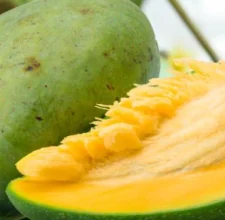
Fresh fruit or juice is the traditional form — the immature green gourd, cooked or juiced. It carries water, fibre, vitamin C and the plant's bitter constituents at whatever concentration the fruit happened to have. Dried fruit powder is simply that fruit dehydrated and milled; it is the closest capsule equivalent to eating the vegetable, and it is also the bulkiest, which is why capsule doses of it are usually small compared with a culinary portion. Seed material is a different tissue entirely, richer in some constituents and the source of specific safety cautions discussed further down. Whole-plant or aerial extracts may include leaf and vine, which traditional practice used differently again.
On top of that sits the solvent question. A water extract, an alcohol extract and a supercritical extract of the same fruit pull out different compound families in different ratios. Two bottles can both say "bitter melon extract 500 mg" and contain substances that overlap only partially. When a category has no agreed reference standard, milligrams stop being a shared language.
The standardisation problem that makes labels non-comparable
Standardisation is the practice of guaranteeing a fixed percentage of a named marker compound in every batch — the way a milk thistle extract might be standardised to 80% silymarin. It is what allows a shopper to compare two products honestly, and it is what allows a researcher to repeat someone else's trial.
Bitter melon has never settled on one. Some suppliers standardise to "bitters" or "charantin", some to total saponins, many to nothing at all. Charantin itself is not a single molecule but a mixture of steroidal glycosides, and analytical methods for measuring it differ between laboratories. The practical consequence is blunt: you cannot convert one product into another, you cannot line a label up against a published trial with confidence, and a higher milligram number does not reliably mean more of whatever is active.
When a botanical has no agreed marker compound, the milligram figure on the front of the box is a measure of plant material, not of potency. It tells you how much powder is in the capsule, not how much of anything that matters.
This is not a reason to dismiss the plant. It is a reason to be sceptical of precision that the category cannot support — and to treat any product marketing itself as the best blood sugar supplement on the strength of a bitter melon number with the caution that claim deserves.
Prefer to see the whole panel before you decide?
Glyco Harmony takes a different route from a single-herb capsule: chromium plus a botanical blend led by gymnema, maca, green tea and ginseng, delivered as daily drops. The full ingredient panel and current package options are laid out on the official page — useful if you are comparing what the best herbal supplement for blood sugar shortlists actually contain.
See the Official Ingredient PanelWhat the human trials actually show
Here the tone has to drop. Bitter melon has been studied in people for decades, and the literature is characterised by small sample sizes, short durations, varied preparations and inconsistent outcomes (Yeh et al., 2003). Some trials have reported modest reductions in fasting glucose; others have found no significant difference from placebo (Peter et al., 2019). A comparison against an established glucose-lowering medication reported the medication performing considerably better, which is the result most clinicians would have predicted.
When researchers have pooled this work systematically, the recurring verdict is that the trials are too few, too small and too heterogeneous to support a firm conclusion (Ooi et al., Cochrane 2012). The United States National Center for Complementary and Integrative Health, part of the National Institutes of Health, summarises the situation as insufficient evidence to recommend bitter melon for glucose control — language chosen carefully to mean "we do not know", not "it fails".
That distinction deserves emphasis, because both directions of spin are wrong. Marketing that treats bitter melon as clinically established is ahead of the data. Dismissal that treats it as debunked is also ahead of the data. The accurate statement is that the question has not been answered at the scale and quality it would need to be answered.
Doses that have been studied, and why the numbers do not transfer
Published work has used everything from a culinary portion of the fresh gourd to concentrated capsules, with daily amounts spanning roughly an order of magnitude between preparations. Because the preparations differ so much, a milligram figure from one trial cannot simply be copied onto a different product — a gram of dried fruit powder and a gram of a concentrated solvent extract are not the same exposure. The table below is a map of the forms rather than a dosing recommendation, and the right dose for any individual is a conversation with a clinician who knows their medication list.
| Form | What it actually is | Practical notes | Evidence strength |
|---|---|---|---|
| Fresh fruit or juice | The whole immature gourd, cooked or pressed | Culinary amounts; strong bitterness limits intake; content varies with cultivar and ripeness | Traditional use; few controlled trials |
| Dried fruit powder | Dehydrated, milled fruit in a capsule | Bulky, so capsule servings are far below a culinary portion | Low — small, short trials, mixed results |
| Concentrated extract (water or alcohol) | Solvent-extracted fraction, often given a ratio such as 10:1 | Ratio describes starting material, not potency; solvents pull different compounds | Low — hard to compare between products |
| Seed-derived material | Ground seed or seed extract | Different compound profile; carries specific cautions (see below) | Very limited human data |
| Blend component | Bitter melon inside a multi-herb formula | Individual amount often undisclosed inside a proprietary blend | Not assessable from the label alone |
Cautions: who should be careful, and why
A plant with a long food history is not automatically a plant without risks, and bitter melon carries several that deserve plain statement.
Digestive upset is the most commonly reported effect — abdominal discomfort, cramping and loose stools, more likely at higher intakes. Pregnancy is a clear avoid: traditional practice used parts of the plant to stimulate the uterus, and that history alone is reason enough not to experiment while pregnant or trying to conceive. Seed material contains vicine, the same compound implicated in favism, so people with glucose-6-phosphate dehydrogenase (G6PD) deficiency have a specific reason for caution. Children should not be given it outside of food.
The interaction that matters most, though, is additive effect. If a person is already taking a medication that lowers glucose and adds a supplement that may nudge glucose in the same direction, the combined effect can overshoot. That is not a theoretical concern; it is the mechanism behind most supplement-related hypoglycaemia stories. Anyone on insulin, a sulfonylurea, metformin or any other glucose-lowering prescription should treat adding a botanical as a change worth discussing with the prescriber first, and should be alert to the symptoms of a low. Our companion piece on how botanicals compare with prescription options goes into why "natural" and "mild" are not synonyms.
Medical note: this article is general information, not medical advice. Bitter melon is a food and a dietary ingredient for nutritional support; it is not intended to diagnose, treat, cure or prevent any disease. Speak to a healthcare professional before starting any supplement, especially if you take glucose-lowering medication, are pregnant or nursing, or manage a health condition.
What bitter melon cannot do
An honest limits section is worth more than another paragraph of mechanism, so here it is in plain terms. Bitter melon cannot be relied upon to lower glucose by a predictable amount. It cannot replace a prescribed medication, and stopping one in favour of a capsule is a genuinely dangerous idea. It cannot undo the effect of a diet built on refined carbohydrate, and it cannot substitute for sleep, movement or the basic metabolic work that those do.
It also cannot be dosed with confidence from the current literature, because the preparations studied are too varied to yield a transferable number. And it cannot be assumed safe for everyone: pregnancy, G6PD deficiency and concurrent glucose-lowering medication are all real limits, not disclaimers added for legal comfort.
What it may do — and the verb is deliberate — is contribute modest support as one part of a broader pattern, in the way that a fibrous, bitter vegetable contributes to a diet. That is a smaller claim than most labels make, and it is the one the evidence currently supports.
How to judge a formula that lists bitter melon
If you are shopping the category, a handful of questions cut through most of the noise. First, which part of the plant is named? "Fruit extract" is a more informative label than "extract". Second, is there a standardisation statement, and to what marker? If there is none, treat the milligram figure as a description of plant material rather than potency. Third, is the amount disclosed at all, or is bitter melon buried inside a proprietary blend where the individual quantity is unknowable?
Fourth, and most useful: what is the rest of the formula doing? A single-herb capsule lives or dies on that herb. A blend spreads its bet, and the sensible question becomes whether the ingredients that carry the better evidence are present at amounts that resemble the studies. That is the frame we use across our guide to choosing a blood sugar formula, and it is the reason we publish the ingredient panels rather than adjectives.
It is also why Glyco Harmony reads differently from a bitter melon capsule. Its panel leads with chromium as chromium picolinate alongside a 200 mg botanical blend built around gymnema, maca, African mango, green tea and ginseng, delivered as a liquid rather than a tablet. Whether that composition suits you is a decision to make with the full panel in front of you — which is exactly why we link to it rather than paraphrase it.
Scientific references
- Ooi CP, Yassin Z, Hamid TA. “Momordica charantia for type 2 diabetes mellitus.” Cochrane Database of Systematic Reviews, 2012 — 4 trials, 479 participants, insufficient evidence
- Peter EL, et al. “Momordica charantia L. lowers elevated glycaemia in type 2 diabetes mellitus patients: systematic review and meta-analysis.” Journal of Ethnopharmacology, 2019
- Yeh GY, et al. “Systematic review of herbs and dietary supplements for glycemic control in diabetes.” Diabetes Care, 2003
- NIH NCCIH — Diabetes and Dietary Supplements: What You Need To Know
- NIH Office of Dietary Supplements — complete list of ingredient fact sheets
- Mayo Clinic — Supplements, glucose management and what to ask a clinician
- Harvard T.H. Chan School of Public Health — Carbohydrates and Blood Sugar
Does bitter melon lower blood sugar?
The evidence is preliminary rather than settled. Compounds in bitter melon influence glucose handling in laboratory and animal models, but human trials have been small, short and inconsistent, and health bodies including the NIH National Center for Complementary and Integrative Health describe the evidence as insufficient. It may offer modest nutritional support for some people, and it should not be relied on to lower blood sugar.
What is the difference between bitter melon fruit and seed extracts?
They are different plant tissues with different compound profiles, so they are not interchangeable. Fruit and dried fruit powder are closest to eating the vegetable. Seed material carries specific cautions because it contains vicine, which matters for people with G6PD deficiency. Whole-plant extracts may include leaf and vine. A label that only says extract has not told you which part is in the bottle.
How much bitter melon do studies use?
Published work ranges from culinary portions of the fresh gourd to concentrated capsules, and the amounts are not transferable between forms because a gram of dried fruit powder is not the same exposure as a gram of concentrated extract. There is also no agreed standardisation marker, so two labels showing the same milligram figure can contain different amounts of active constituents.
Who should avoid bitter melon?
Anyone who is pregnant or trying to conceive should avoid it, because parts of the plant have traditionally been used to stimulate the uterus. People with G6PD deficiency should be cautious because bitter melon seed contains vicine. Children should not take it outside of food. Anyone using glucose-lowering medication should speak to their prescriber first, since additive effects can push blood sugar too low.
Related reading
See how Glyco Harmony puts this together
A once-daily liquid blood sugar support blend, with every ingredient printed on the panel so you can check the amounts against the research yourself — the same standard we would apply to any best natural supplement for blood sugar control shortlist.