Chromium (as chromium picolinate)
Trace mineralA trace mineral studied for its part in how insulin acts.
MineralNamed in the advertisingListed first, on its own line
Glyco Harmony lists 23 ingredients. Chromium picolinate comes first, at 0.7 mcg in each 1 ml serving, then a 200 mg blend of 22: twelve plant extracts, eight amino acids and two plant compounds, maca root first by weight and L-carnitine last. The advertising features six of the 23: chromium, gymnema, African mango, green tea, maca and Panax ginseng.
Below: those six, the label itself, a card for every name, the research beside the label and the base the drops are made in.
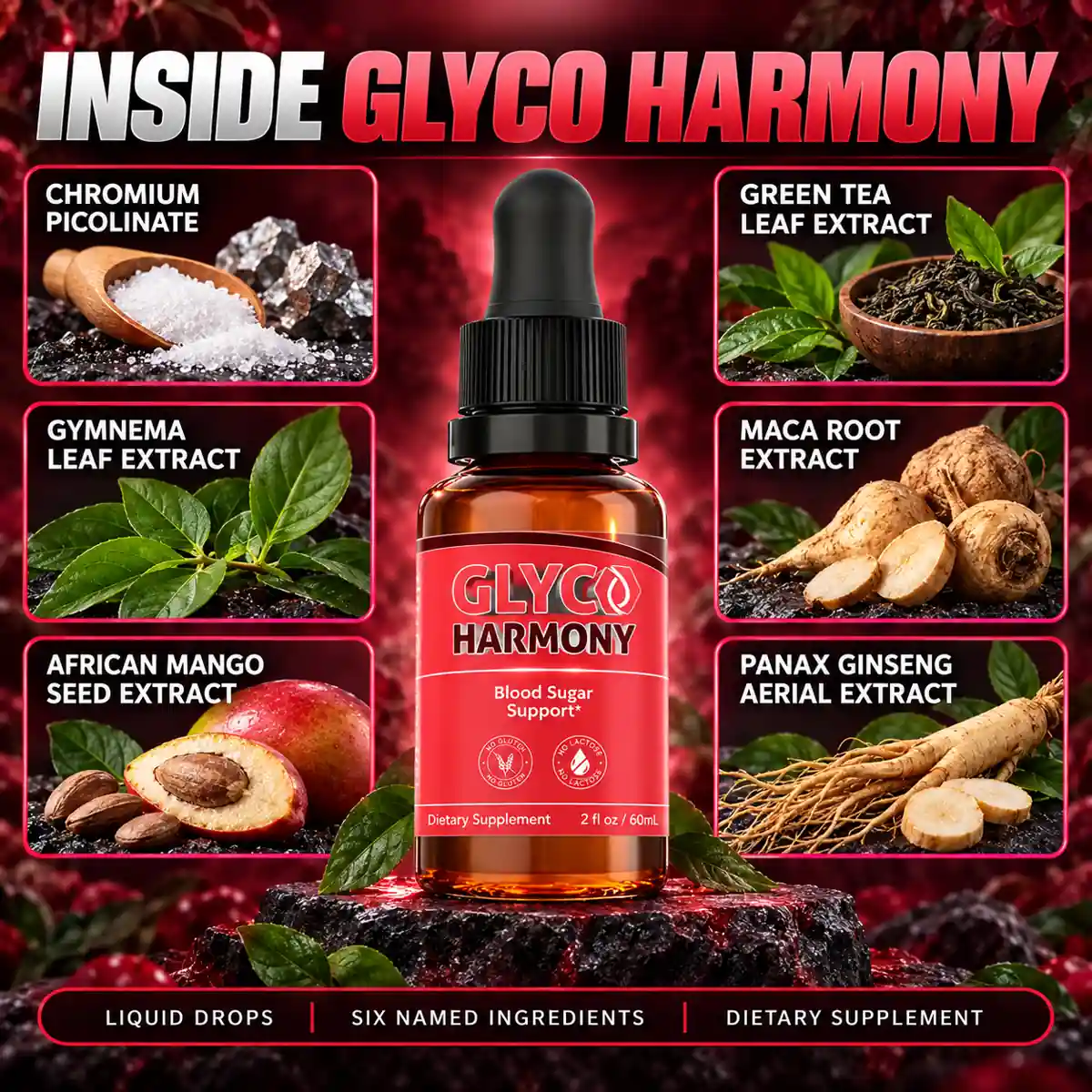
The names on the seller’s page and in the artwork above. Each also has a card in the full list below.
A trace mineral, and the one name with its own line: 0.7 mcg a serving, 2% of the Daily Value. The NIH says chromium may boost insulin’s action.
An Ayurvedic leaf whose gymnemic acids are credited with its glucose activity (Khan 2019). Eighth in the blend.
A West African seed. Its one trial followed 102 overweight adults for 10 weeks (Ngondi 2009). Fourth in the blend.
Catechins and a little natural caffeine. Reviews of 22 and 27 trials found a small fall in fasting glucose (Zheng 2013, Xu 2020). Seventh.
An Andean root and the largest share of the blend, which is listed heaviest first. Its trials studied sexual function (Shin 2010).
Asian ginseng, from the parts above the ground. Across 16 trials, ginseng lowered fasting glucose by 0.31 mmol/L (Shishtar 2014). Twelfth.
Why the label lists 23
Six names make a readable advertisement. The panel is the complete list: chromium on its own line, then 22 names sharing one 200 mg blend.
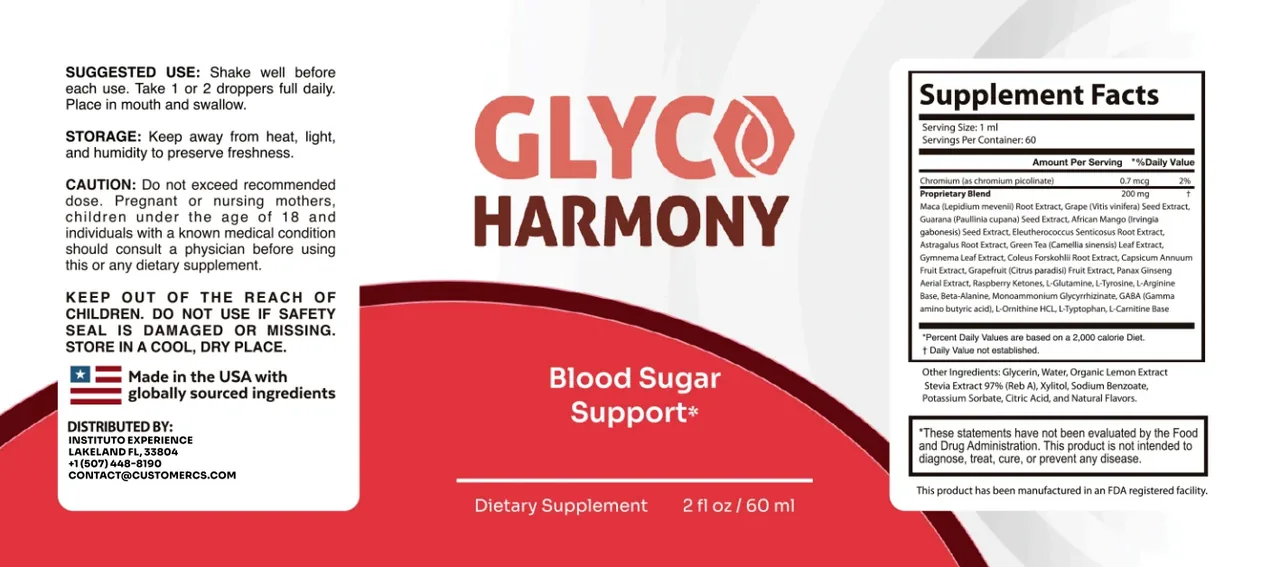
One 1 ml serving, 60 a bottle: chromium at 0.7 mcg, a 200 mg blend of 22 names, then the nine base ingredients.
Heaviest first
US rules list a proprietary blend from the largest share by weight to the smallest (21 CFR 101.36), so the blend’s order is a ranking. Every line is transcribed on the Supplement Facts page.
In panel order: chromium on its own line, then the blend, heaviest first. The six the advertising names carry a dark tag.
A trace mineral studied for its part in how insulin acts.
An Andean root vegetable, first in the blend by weight.
A source of proanthocyanidins, the polyphenols in grape skins and seeds.
An Amazonian seed that naturally contains caffeine.
A West African seed extract studied for body weight and metabolic markers.
A traditional tonic root, accepted in Europe for tiredness and weakness.
A root used in traditional Chinese medicine.
Catechins, EGCG the best known, plus a little natural caffeine.
A leaf from Ayurvedic practice, studied for its gymnemic acids.
The root that supplies forskolin.
Red pepper, for its capsaicinoids.
A citrus extract; grapefruit is known to change how some medicines work.
Asian ginseng, from the above-ground parts rather than the root.
The compound that gives raspberries their smell.
The most plentiful amino acid in the blood.
An amino acid the body builds dopamine and noradrenaline from.
An amino acid the body makes nitric oxide from.
An amino acid the body uses to make carnosine in muscle.
The sweet compound of licorice root, and a known cause of low potassium in large or long use.
An inhibitory chemical messenger in the nervous system.
An amino acid of the urea cycle, how the body clears nitrogen.
An amino acid the body makes serotonin and melatonin from.
Carries fatty acids into cells to be burned for energy; last in the blend by weight.
The label figures are one 1 ml serving. The research figures are the daily amounts the published studies used, in the people they studied.
| Ingredient | On the Glyco Harmony panel | Dose the research used | Evidence for blood sugar |
|---|---|---|---|
| Chromium (as chromium picolinate) | 0.7 mcg (2% DV) | 600 mcg a day for four months in people with type 2 diabetes (Paiva 2015); supplements commonly carry 200–500 mcg (NIH ODS) | Some |
| Gymnema Leaf Extract | Part of the 200 mg blend | 10 studies, 419 people with type 2 diabetes; changes measured against baseline, not placebo | Some |
| Green Tea Leaf Extract | Part of the 200 mg blend | catechins in 22 trials, 1,584 adults: fasting glucose 1.48 mg/dL lower, clearest in trials followed past about 12 weeks | Some |
| Panax Ginseng Aerial Extract | Part of the 200 mg blend | ginseng in 16 trials of 30 days or more: fasting glucose 0.31 mmol/L lower | Some |
| African Mango Seed Extract | Part of the 200 mg blend | 150 mg twice a day (300 mg) for 10 weeks in 102 overweight adults, one trial | Some |
| Coleus Forskohlii Root Extract | Part of the 200 mg blend | 250 mg twice a day (500 mg) for 12 weeks with a reduced-calorie diet, 30 completers: insulin measures improved against placebo | Some |
| L-Carnitine Base | Part of the 200 mg blend | 0.25–4 g a day in trials; each 1 g a day lowered HbA1c by 0.16 points in type 2 diabetes | Some |
| Maca Root Extract | Part of the 200 mg blend | four trials, all on sexual function rather than blood sugar | Limited |
Research doses are what each study gave its volunteers, daily. The label column is one 1 ml serving; two droppers double it.
How to read the table
The chromium trial that lowered fasting glucose gave 600 mcg a day (Paiva 2015); chromium-only supplements commonly carry 200 to 500 mcg (NIH ODS); a pooled review of 14 trials found no significant effect for chromium picolinate (Yin 2015).
The African mango trial gave 300 mg a day, more than a whole 200 mg serving of the blend; the coleus trial gave 500 mg a day, more than the blend even at two droppers (400 mg). The drops repeat no single trial. What the research shows is which ingredients were worth studying for glucose, and for how long.
Nine more lines sit under the panel: the base that carries, sweetens and keeps the blend.
Glycerin and water. Glycerin is a thick, sweet-tasting liquid that holds plant extracts in solution. Shake before each use, as the label asks, so the blend is spread evenly.
Organic lemon extract and natural flavors for taste; stevia extract (97% Reb A) and xylitol for sweetness. Sodium benzoate, potassium sorbate and citric acid keep an opened bottle fresh.
Twenty-three on the Supplement Facts panel: chromium picolinate at 0.7 mcg a serving, plus a 200 mg proprietary blend of 22 names. Nine other ingredients make the liquid base: glycerin, water, organic lemon extract, stevia extract, xylitol, sodium benzoate, potassium sorbate, citric acid and natural flavors.
Two ingredients are natural sources of caffeine: guarana seed extract, third in the blend, and green tea leaf extract, seventh. Both sit inside the 200 mg blend, and no caffeine figure appears on the label, so anyone who avoids caffeine should weigh that.
Sugar is not among the listed ingredients. The sweetness comes from stevia extract (97% Reb A), xylitol and glycerin, with organic lemon extract and natural flavors for taste.
The parts of the plant that grow above the ground, rather than the root. The ingredient artwork draws a root, but the panel names the aerial parts.
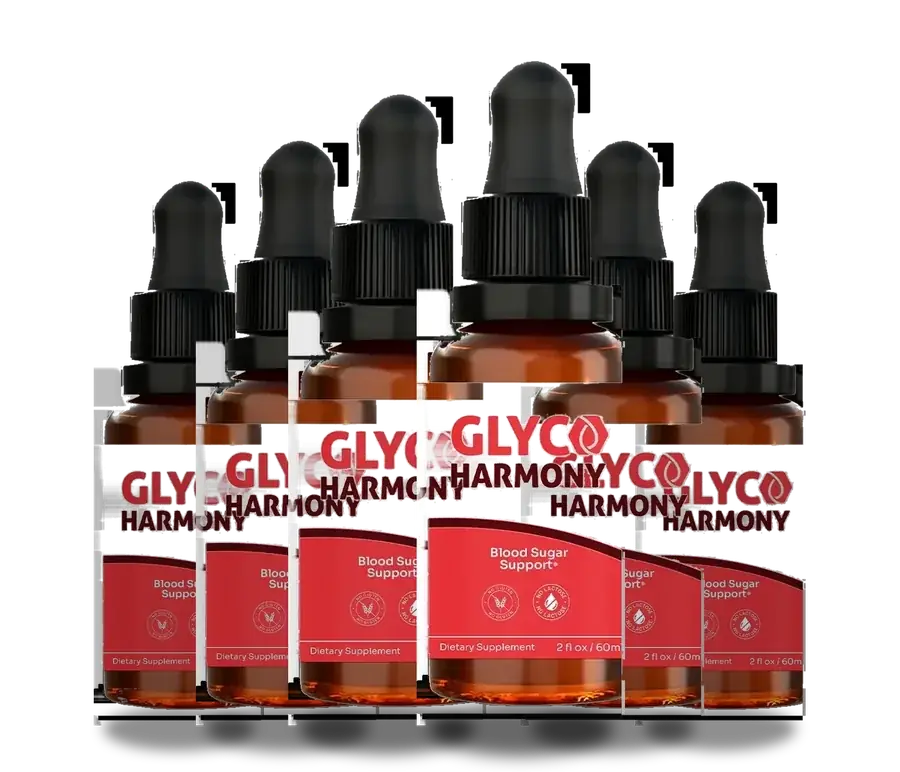
Two, four or eight bottles of the same 60-serving drops. The label on the box that arrives is the one read on this page.
2, 4 or 8 bottles · free US shipping on 4 and 8 · 60 days to change your mind
Choose Your Glyco Harmony PackOne-time payment, no subscription · ships from the United States